How Speed Cameras Work: Radar, Lidar, Types, US Laws & Bans + Instant Speed Conversion Guide
The Flash That Follows You Home: Why Speed Cameras Matter to Every Driver
Picture this: You're on a cross-country road trip, foot steady on the pedal at 70 mph (113 km/h), wind rushing past as the landscape blurs. Suddenly, a subtle flash from a roadside box—or worse, nothing at all. Weeks later, an envelope arrives with your license plate glaring back, demanding payment for speeding. Welcome to the world of speed cameras, the silent enforcers of traffic enforcement transforming how we drive. These devices aren't just revenue generators; they're pivotal to automated traffic safety, catching speeders where officers can't always be. But how do speed cameras work? This guide dives deep into the radar technology, lidar precision, and more, while unpacking US laws, bans, and an Instant Speed Conversion tool to keep you oriented across borders.
For drivers, road trippers, international travelers, and automotive enthusiasts, understanding speed limit enforcement means fewer surprises—and smarter cruising. We'll break down the tech, types, legal battles, and global contrasts, all laced with practical Speed Context to convert units on the fly.
Decoding the Tech: Radar, Lidar, Piezo, and ANPR in Speed Cameras
At their core, speed cameras measure velocity with stunning efficiency. Radar technology, the granddaddy of speed detection, bounces radio waves off your vehicle. The Doppler effect kicks in: waves return faster from approaching cars, slower from receding ones. A quick calculation spits out your speed—say, clocking you at 55 mph (89 km/h) in a 45 mph (72 km/h) zone. Modern Doppler radar handles multiple lanes, even through light rain, with a typical margin of error around 1-2 mph (1.6-3.2 km/h).
Lidar: Laser Precision Takes Over
Enter lidar, or light detection and ranging, the sniper rifle to radar's shotgun. It fires infrared laser pulses—up to 300 per second—targeting your license plate or headlight. Time-of-flight math delivers pinpoint accuracy, often within 1 mph (1.6 km/h). No wide beam means less interference from nearby traffic. If you're zipping at 75 mph (121 km/h), lidar nails it without mistaking the truck beside you.
Piezoelectric Sensors and ANPR: Road-Embedded Smarts
Not all speed cameras perch overhead. Piezo strips, those black rubber tubes you've dodged on highways, embed sensors in the pavement. As tires compress them, electrical pulses time the axles' passage for speed calc. Less common now, but reliable for mobile setups at 50 mph (80 km/h) averages.
ANPR (Automatic Number Plate Recognition) cameras pair with gantries. They snap your plate at point A, then B, computing average speed over distance. Perfect for highways where you might brake for the camera but accelerate after.
Types of Speed Cameras: Fixed, Mobile, and Average Speed Enforcement
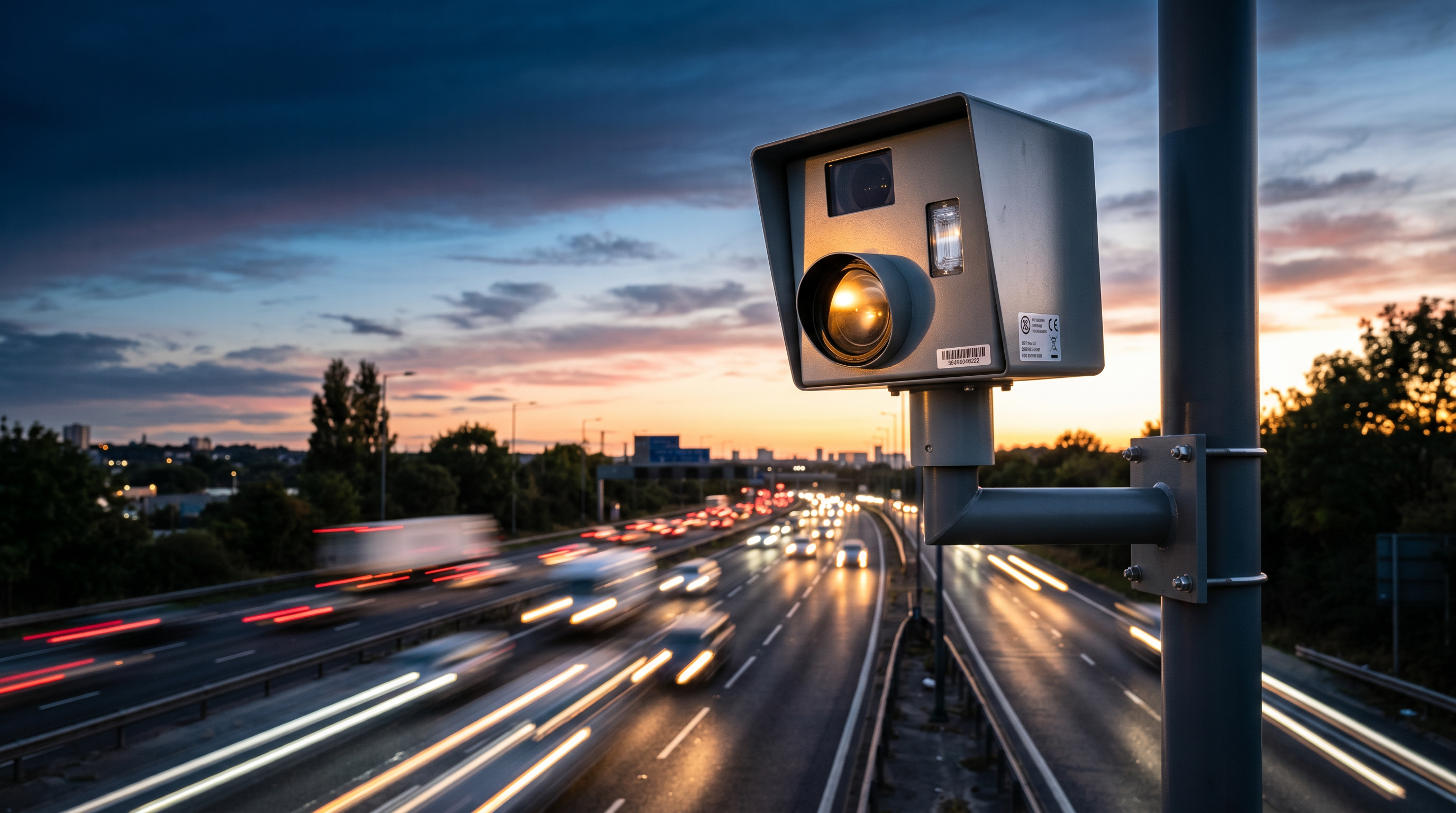
Speed cameras come in flavors to suit any road. Fixed installations loom on poles in high-risk urban spots, snapping photos automatically at speeds over the limit—think 40 mph (64 km/h) school zones. Their permanence deters, but savvy drivers spot the gray boxes from afar.
Mobile Units: The Hidden Threat
Mobile speed cameras hide in vans, on overpasses, or handheld by officers. A van parked innocuously might laser you at 65 mph (105 km/h) from 1,000 feet away. Their mobility keeps enforcement unpredictable, boosting road safety.
Average Speed Cameras: No Point-Spot Escapes
The cleverest? Average speed systems, like UK's gantries spanning 20 miles. Enter at 70 mph (113 km/h), exit slower—your average decides the ticket. They curb brake-and-accelerate tricks, enforcing consistent speed limit compliance.
Accuracy, Margins of Error, and Validating Your Speed Camera Ticket
Are they foolproof? Radar's beam width can snag adjacent vehicles, especially in rain, with errors up to 2 mph (3.2 km/h). Lidar shines narrower, but calibration drifts if unchecked. Laws mandate tolerances: many jurisdictions ignore speeds within 5 mph (8 km/h) over, or 3% for higher speeds.
Challenged a ticket? Request calibration certs, officer logs, and photos. Blurry plates or wrong vehicle? Fight it. In court, prove the margin exceeded—like radar's 2 mph (3.2 km/h) buffer ignored. Success rates hover 20-30% for contested tickets, per public records.
- Check timestamp and weather for interference.
- Verify plate match and signage.
- Appeal within deadlines—many waive fees for first offenses.
US Laws and Bans: A Patchwork of Speed Limit Enforcement
America's 50 states splinter on automated traffic safety. About 20 states and DC allow speed cameras, often city-limited: California, New York, Illinois (Chicago battles persist). Fines start at $50-250 for 10-20 mph (16-32 km/h) over.
Bans dominate elsewhere: Texas, Florida, Virginia prohibit photo radar outright, citing privacy and officer jobs. Thirteen states fully ban speed photo enforcement, including Arizona (after Prop 202 failed), Michigan, and South Carolina. Road trippers: Scan apps like Waze for hotspots, but know local rules vary—Phoenix uses mail-in tickets legally.
Global Speed Context: UK, Australia, Germany Compared
Cross the pond, and speed cameras proliferate. UK's 7,500+ Gatso fixed cams enforce 70 mph (113 km/h) motorways with 10% + 2 mph (3.2 km/h) tolerance. Fines hit £100 ($130), points on license.
Australia's states vary: Victoria's mobile vans laser ruthlessly at 100 km/h (62 mph) limits. Germany favors section control on autobahns—average over 10 km (6 miles), unlimited stretches notwithstanding. Tolerance: 3% for cars. Travelers, note Europe's km/h norm; US mph can mislead without conversion.
Instant Speed Conversion Guide: Master the '8 and 5' Rule
Borders blur speeds: 100 km/h = 62 mph (exact 62.1). Enter SpeedShift's '8 and 5' mental math rule for Instant Speed Conversion. Multiply mph by 8, divide by 5: 60 mph × 8 = 480 ÷ 5 = 96 km/h. Reverse: km/h × 5 ÷ 8. 100 km/h × 5 = 500 ÷ 8 = 62.5 mph. Bang—Speed Context in seconds.
Quick Chart:
- 50 mph (80 km/h)
- 60 mph (97 km/h)
- 70 mph (113 km/h)
- 80 mph (129 km/h)
- 100 km/h (62 mph)
- 110 km/h (68 mph)
- 120 km/h (75 mph)
Practice on trips: Spot a 110 km/h (68 mph) sign? Glide safely. This rule arms international travelers against fines.
Drive Informed: The Road Ahead
Speed cameras evolve—AI now predicts risky speeds—but the game stays: Know the tech, respect limits with Speed Context, and challenge errors. Whether stateside patchwork or Europe's web, informed driving saves cash and lives. Next road trip, convert on the fly, scan for flashes, and cruise confidently. Safe travels.