UK Speed Limits Guide for Tourists: MPH Breakdown, KPH Conversions, Smart Motorways, Signs & Enforcement Tips
Picture this: You're cruising the winding lanes of the Cotswolds, the rolling hills unfolding like a postcard, when suddenly a flash pierces the rearview mirror. Heart racing, you wonder—did you just cross into UK speed limits territory without a map? For tourists hitting the roads of Britain for the first time, or new residents gripping the wheel of their shiny first car, understanding UK road speed limits isn't just smart; it's your ticket to stress-free adventures. This UK driving guide unpacks everything from motorway mph to kph conversions, decoding signs that might as well be hieroglyphs, and sidestepping fines that could sour your trip.
Forget the guesswork. Whether you're swapping Europe's generous autobahns for Britain's disciplined motorways or navigating from airport rental to Highland castles, we've got the authoritative breakdown. Let's dive in, shall we?
UK Road Speed Limits: The Complete MPH Breakdown by Road Type
Britain's speed limits are straightforward once you know the layers, tailored to road type and conditions. Unlike many European neighbors where kph reigns supreme (think Germany's 130 kph autobahns, roughly 81 mph), the UK sticks stubbornly to mph. The default national speed limit for cars and motorcycles applies unless a sign says otherwise—vital knowledge for any driver in the UK as a tourist.
Motorways and Dual Carriageways: 70 mph (113 kph)
Hit the M1 or M25, and you're in 70 mph territory—the gold standard for high-speed travel. That's about 113 kph, a touch slower than France's 130 kph autoroutes but enforced with laser precision. Dual carriageways (those divided highways with barriers) mirror this at 70 mph, unless signed differently. Pro tip: Windy conditions or heavy rain? Drop it voluntarily; cops love common sense.
Single Carriageways: 60 mph (97 kph)
Rural A-roads, like the scenic A303 near Stonehenge, cap at 60 mph (97 kph). It's brisk—faster than Spain's 90-100 kph extras—but oncoming traffic demands vigilance. Think of it as Europe's 100 kph single lanes with a British twist: narrower, hedge-lined, and full of surprises like tractors dawdling at 20 mph.
Built-Up Areas and Residential Zones: 30 mph (48 kph) or 20 mph (32 kph)
Street lights on? You're in 30 mph (48 kph) land—standard for towns and cities, akin to Italy's 50 kph urbanos. But watch for 20 mph zones in residential spots, schools, and villages (32 kph). These are proliferating, especially in London boroughs, mirroring Europe's push for safer streets. Signs are everywhere; ignore at your peril.
- Motorways/Dual: 70 mph / 113 kph
- Single Carriageways: 60 mph / 97 kph
- Urban (lit roads): 30 mph / 48 kph
- Residential/20s Plenty: 20 mph / 32 kph
Memorize this mph to kph cheat sheet, and you're golden. New UK residents: Your sat-nav will chime reminders, but nothing beats knowing it cold.
MPH to KPH: Essential Conversions for International Drivers
If you're from kph-land—Germany, France, or beyond—the mph to kph switch hits like culture shock. Quick math: Multiply mph by 1.609 for kph. So, that 70 mph motorway hums at 112.6 kph; 60 mph singles at 96.6 kph; 30 mph towns at 48.3 kph. Rental car speedos often dual-display, but verify—some cheap ones don't.
Compared to Europe: UK's 70 mph motorway is milder than unlimited Autobahn stretches but matches many capped sections (e.g., Netherlands' 100-130 kph). Urban 30 mph aligns with 50 kph norms, while 20 mph zones are stricter, prioritizing pedestrians over pace. Tape a conversion sticker to your dash: 50 mph = 80 kph, 40 mph = 64 kph. It'll save your sanity on that first UK drive.
"The mph fog lifts when you convert once—then the roads feel familiar."
Smart Motorway Speed Limits: Variable Gantries Demystified
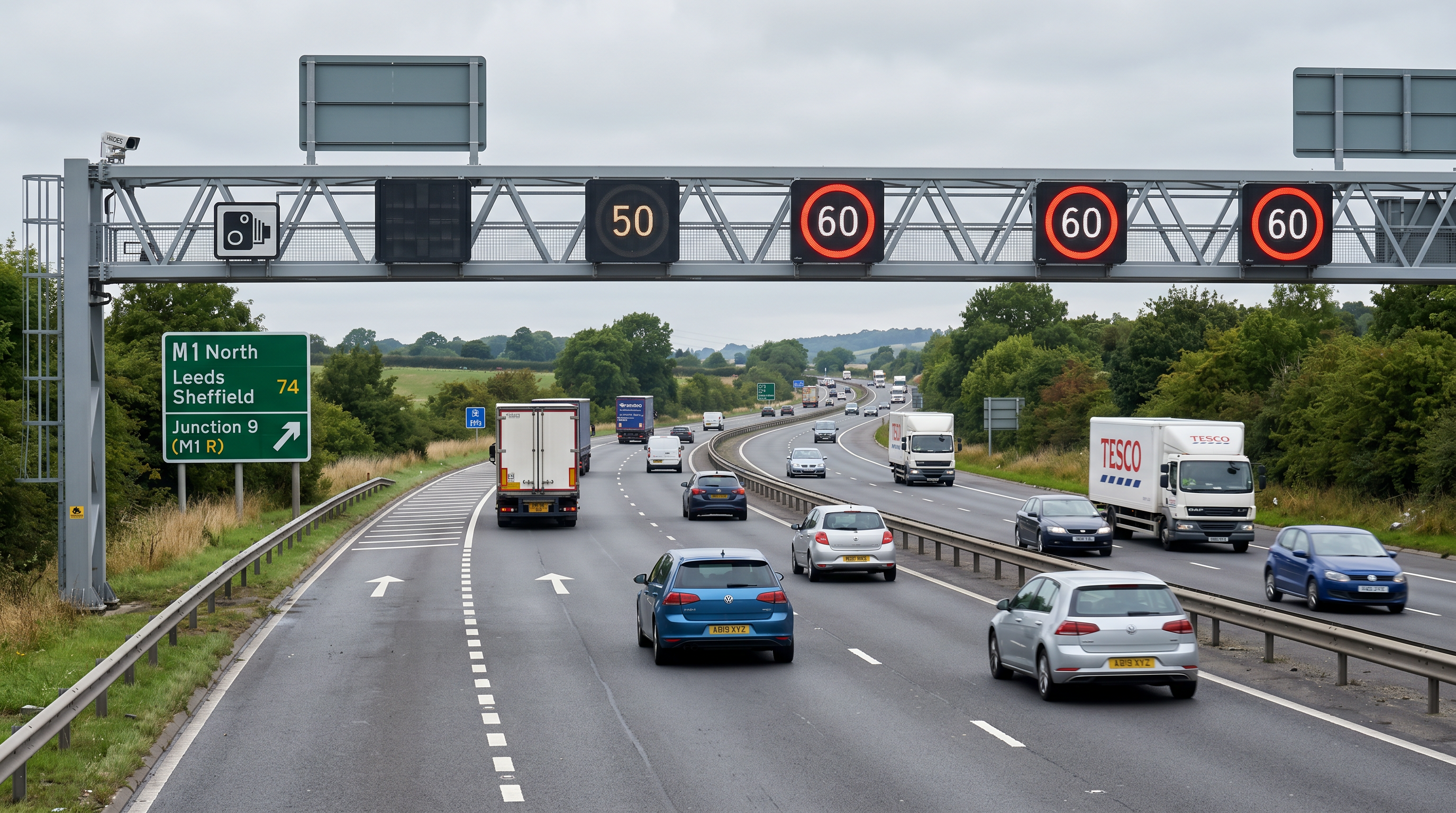
Enter smart motorways—the UK's high-tech evolution on stretches like the M42 or M6. No hard shoulder; instead, gantries overhead flash dynamic limits from 40-70 mph (64-113 kph), reacting to congestion, weather, or incidents. Red 'X' means lanes closed—pull over only at marked refuges.
Tourists, beware: Limits drop suddenly to 50 mph (80 kph) or 40 mph (64 kph) in queues. Cameras monitor 24/7. It's like variable European toll roads but smarter, using sensors for real-time tweaks. Glance up religiously; your UK driving guide mantra: Gantry trumps all.
- Scan gantries every few seconds.
- 40 mph min? Congestion ahead—ease off.
- National limit symbol? Back to 70 mph.
UK Speed Limit Signs: How to Read Them at a Glance
The Icons You Need to Know
UK speed limit signs are color-coded logic. Circular with red border? Mandatory limit (e.g., 30 in black). Repeater signs dot roads. National speed limit: Hollow white circle with black diagonal slash—reverts to type defaults (70/60/30 mph).
Rectangular blue? Info or end of limit. Variable gantries: LED monsters with mph numerals or 'NSL' (National Speed Limit). Plate below signs adds context, like 'when lights flash.'
- Circular Red: Hard limit—obey!
- White Circle/Black Slash: National default.
- Gantries: Dynamic, overriding all.
- 20 Plates: Often with kids/school icons.
Practice spotting them via Google Street View before wheels hit tarmac.
Common Mistakes Tourists and New Drivers Make with UK Speed Limits
Ah, the pitfalls. Americans muscle in at 70 mph everywhere (hello, US interstates). Europeans blast 100+ kph on singles, forgetting 60 mph caps. New residents miss 20 mph villages—fines lurk like Land Rovers in fog.
Other traps: Ignoring gantries ("It's 70, right?"), assuming lit roads mean 70 mph, or sat-nav overconfidence. Rental cars lack UK familiarity; jet lag dulls reactions. Counter: Buffer 5 mph under, especially first days.
Enforcement: Cameras, Fines, and Penalty Points Explained
Big Brother watches via Gatso fixed cameras (those grey boxes), average-speed Truvelo on motorways (entry-exit timing), and yellow mobile vans. Specced over 10% + 2 mph (e.g., 35 in 30), expect £100 fixed penalty notice (FPN) posted to rental firms—who chase you home.
Worse: 3-6 points on license (12 = ban). Tourists? International agreements mean points haunt records. Court for bad cases: £1,000+ fines. Smart motorways? Average cams nail queue-jumpers. Drive clean—it's not worth the postcard regret.
- Fixed Penalty: £100, 3 points (31-40 in 30).
- Speed Awareness: Course option for minor slips.
- Motorway Avg: No escape if averaged high.
Drive Confident: Your UK Roads Action Plan
Armed with this UK speed limits blueprint—from 70 mph motorways (113 kph) to sneaky 20s, smart gantries to sign savvy—you're primed. Convert mph to kph mentally, scan ahead, buffer speeds. Britain's roads reward the prepared: Epic drives from Lake District loops to Cornish coasts await.
One last whisper: When that flash fades unrealized, exhale. You've mastered the mph maze. Safe travels—cheers to the journey.