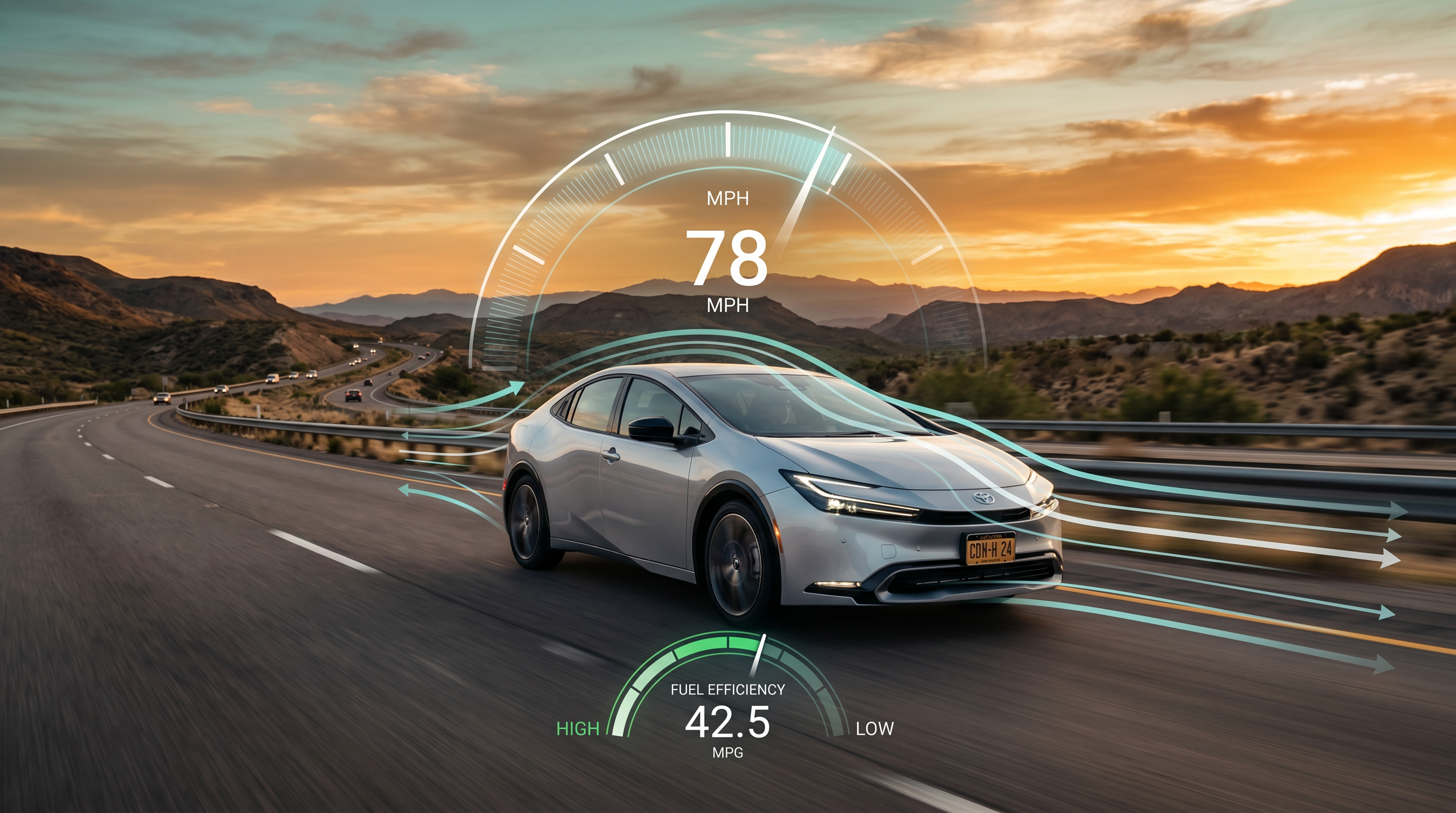
Why Speeding Kills Your MPG: The Physics of Optimal Fuel Efficiency on Highways
The Myth of Speeding to Save Time
Picture this: you're merging onto the highway, eyes on the clock, convinced that flooring it to 80 mph (129 km/h) will shave precious minutes off your commute or road trip. It's a ritual as old as the interstate itself—speeding for the win, right? After all, who hasn't felt that rush of passing slower traffic, heart pounding with the illusion of efficiency?
But here's the gut punch: while you might gain a few minutes, you're torching your fuel efficiency, MPG, and wallet in the process. Speeding doesn't just burn more gas; it does so exponentially. The central question every everyday driver, commuter, and road tripper should ask is simple: Is that fleeting time savings worth the skyrocketing gas bill? Let's dive into the physics that proves speeding kills your miles per gallon—and your budget.
The Physics of Air Resistance: Why Drag Force Explodes at Highway Speeds
Air isn't empty space—it's a thick soup of molecules slamming into your car like an invisible wall, and the faster you go, the harder it fights back. This force is called drag force, and it's the biggest thief of fuel efficiency on highways.
In plain English, the formula for drag force (Fd) is Fd = ½ ρ v² Cd A. Break it down:
- ρ (rho): Air density—constant on a typical day.
- v: Your speed—the game-changer.
- Cd: Drag coefficient—how slippery your car is (think Prius vs. brick-on-wheels).
- A: Frontal area—the bigger your grill, the worse.
Notice v²? Drag force increases with the square of your speed. Double your highway speed from 50 mph (80 km/h) to 100 mph (161 km/h), and drag quadruples. Your engine now works four times harder just to push through the air.
Relatable example: At 60 mph (97 km/h), air resistance might eat 50% of your engine's power. Crank to 80 mph (129 km/h), and it's over 70%. That extra throttle? Pure fuel guzzler. No wonder gas mileage plummets as speeds climb—it's physics, not punishment.
Finding Your MPG Sweet Spot: The Optimal Driving Speed for Peak Fuel Economy
Every car has a Goldilocks zone for fuel economy—not too slow, not too fast. For most vehicles, peak MPG hits between 50-60 mph (80-97 km/h). Why? Engines thrive in a sweet spot of RPMs where they're most efficient, and transmissions are geared for it.
The U.S. Department of Energy (DoE) and EPA confirm this: highway fuel economy tops out around 50-60 mph for sedans, SUVs, and trucks. Go slower, and engine drag or idling inefficiencies creep in. Faster? Air resistance dominates, murdering your miles per gallon.
Modern automatics shift to favor this range, but speeding forces downshifts, revving the engine harder. Hybrids extend the sweet spot higher, but the rule holds: optimal driving speed maximizes gas mileage without waste.
Speed vs. MPG: The Data Doesn't Lie
Let's look at hard numbers for a typical midsize sedan (think Honda Accord or Toyota Camry). These figures are based on real-world tests and EPA data trends.
| Speed (mph / km/h) | Estimated MPG (km/l) |
|---|---|
| 45 (72) | 35 (14.9) |
| 55 (89) | 33 (14.0) |
| 65 (105) | 29 (12.3) |
| 75 (121) | 24 (10.2) |
| 85 (137) | 19 (8.1) |
Now, for a 300-mile highway trip, see the time saved versus extra fuel cost compared to cruising at 65 mph (105 km/h):
| Speed (mph) | Trip Time (hours) | Gallons Used | Cost ($3.50/gal) | Time Saved vs 65mph (min) | Extra Cost vs 65mph |
|---|---|---|---|---|---|
| 65 | 4.62 | 10.3 | $36.20 | — | — |
| 75 | 4.00 | 12.5 | $43.75 | 37 | $7.55 |
| 85 | 3.53 | 15.8 | $55.30 | 64 | $19.10 |
Diminishing returns scream from the page: tiny time gains, massive fuel hits.
Crunch the Numbers: A 300-Mile Trip Breakdown
Let's walk through the math for that 300-mile haul at $3.50 per gallon.
65 mph (105 km/h) Baseline
Time: 300 ÷ 65 = 4.62 hours (278 minutes).
Gallons: 300 ÷ 29 MPG = 10.34.
Cost: 10.34 × $3.50 = $36.19.
75 mph (121 km/h) Speed Demon
Time: 300 ÷ 75 = 4 hours (240 minutes)—saves 38 minutes.
Gallons: 300 ÷ 24 = 12.5.
Cost: 12.5 × $3.50 = $43.75—extra $7.56.
Worth 38 minutes for $7.56? Your call, but fuel economy nosedives.
85 mph (137 km/h) Reckless
Time: 300 ÷ 85 ≈ 3.53 hours (212 minutes)—saves 66 minutes total.
Gallons: 300 ÷ 19 ≈ 15.79.
Cost: 15.79 × $3.50 ≈ $55.27—extra $19.08.
Sixty-six minutes for nearly $20? Speeding's true cost in stark relief.
Scale this to weekly commutes or cross-country drives, and the dollars stack up fast.
Why We Speed Anyway: The Psychology Behind the Pedal
Knowing the physics, why do we still mash the accelerator? Time feels elastic—we overestimate minutes saved and underestimate gallons burned. There's a thrill in control, passing packs, and the highway's siren call. Cognitive biases like optimism ("I'll make it up elsewhere") keep us hooked, even as MPG suffers.
Practical Tips to Maximize Fuel Efficiency on Highways
Armed with science, reclaim your gas mileage:
- Use cruise control religiously: Locks in steady speeds, slashing air resistance variability.
- Anticipate traffic: Gentle braking beats hard acceleration.
- Maintain optimal highway speed: Aim 55-65 mph (89-105 km/h) for most cars.
- Check tire pressure monthly: Underinflated tires spike rolling resistance by 10%.
- Ditch roof racks and heavy loads: They amplify drag force.
- Plan routes wisely: Avoid hills where possible; use apps for real-time efficiency.
Pro tip: Tools like the SpeedShift Converter at getspeedconvert.com let you plug in your speed, distance, and MPG to see personalized time-vs-cost trade-offs.
Slow Down to Save Big: The Unambiguous Physics Verdict
The data is crystal: speeding murders fuel efficiency through ruthless air resistance and drag force. That MPG sweet spot at 50-60 mph (80-97 km/h) delivers optimal driving speed without the waste. Next road trip or commute, weigh those minutes against the pump pain—your wallet (and the planet) will thank you.
Experiment with the SpeedShift Converter for your routes. Drive smarter, not faster.