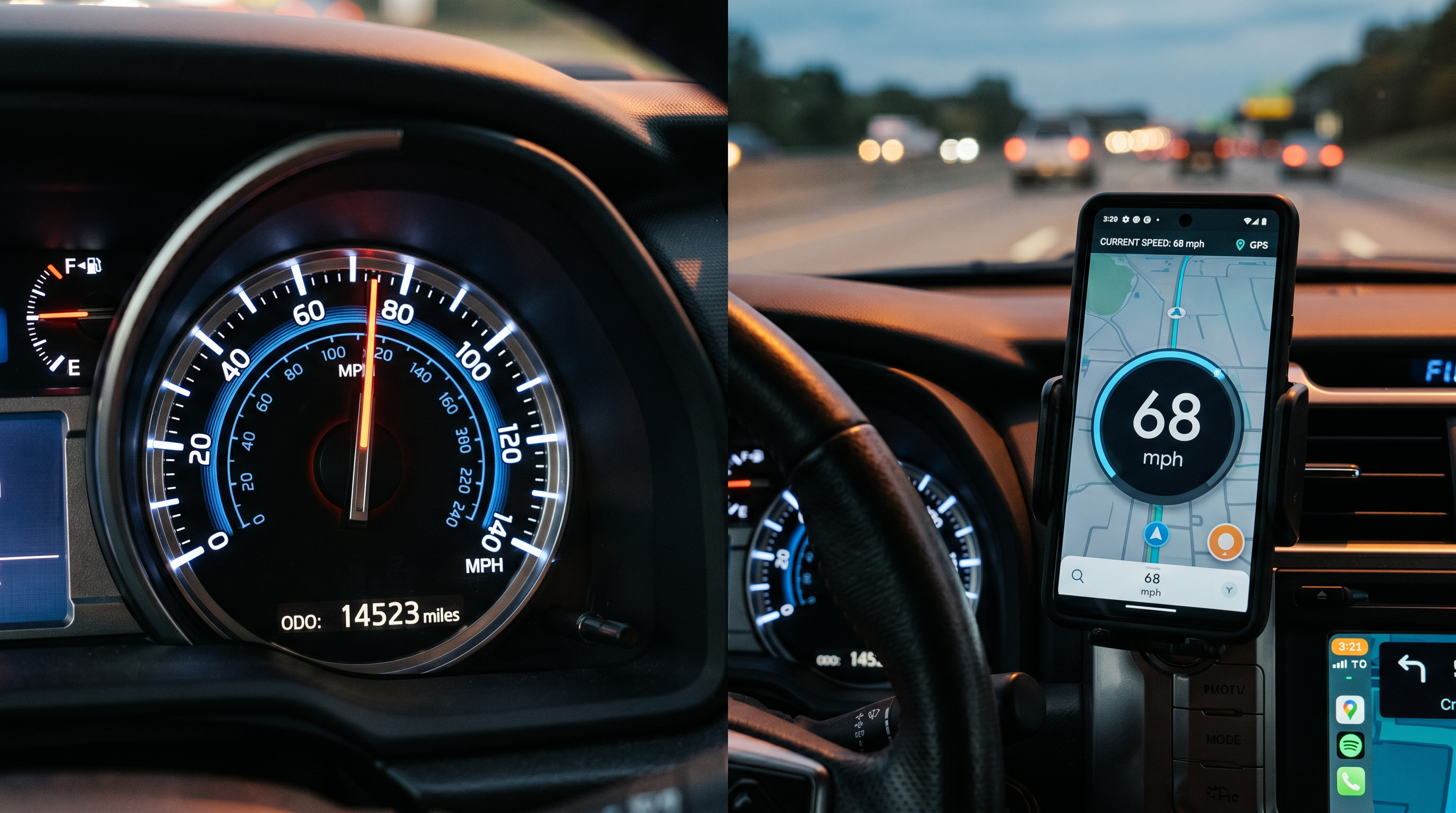
Why Your Speedometer Always Reads High: Shocking Truth on Accuracy, Errors & GPS vs Speedo
The Speedometer Lie You've Been Living With
Picture this: You're cruising down the highway, eyes glued to the needle hitting exactly 70 mph. Feels safe, right? Wrong. That trusty speedometer in your dashboard is fibbing to you—almost always reading higher than your actual speed. It's not a glitch or shoddy engineering. It's by design.
If you've ever synced your phone's GPS app with your speedo and scratched your head at the mismatch, you're not alone. This speedometer error is so common it borders on universal. Curious drivers everywhere are discovering the truth, and it changes how they drive. Stick around, because we're diving deep into speedometer accuracy, why it happens, and what it means for you.
By the end, you'll know exactly how much to mentally shave off your readings, when GPS trumps the speedo, and even spot when your car's begging for a calibration check.
Why Manufacturers Make Speedometers Read High on Purpose
Here's the kicker: car makers don't accidentally build inaccurate speedometers. They deliberately calibrate them to overread. Call it a built-in safety margin, but it's rooted in cold, hard liability avoidance.
Think about it. If your speedo read low and you got nailed for speeding, you'd blame the car. Lawsuits galore. So engineers err on the side of caution: better to show 65 when you're doing 62 than the reverse. This speedometer inaccuracy acts like a conservative buffer against tickets and crashes.
From an engineering standpoint, speedometers pull data from your transmission's output shaft or wheel sensors. They count revolutions and multiply by an assumed tire circumference. Manufacturers test with brand-new tires at factory specs, then bake in extra padding for real-world wear. Result? Your speedo whispers, "Slow down," even when you're golden.
It's not just safety theater. Over time, tires shrink slightly, amplifying the effect. Smart design, sneaky execution.
Speedometer Legal Requirements: What the Law Demands Around the World
EU and UK: Strict Caps on How High It Can Read
In the European Union, ECE Regulation 39 sets the bar: your speedometer cannot read lower than true speed, and the maximum overread is the greater of 10% of true speed or 4 km/h (about 2.5 mph). Post-Brexit, the UK mirrors this exactly. No wild variances allowed—precision with a safety tilt.
This keeps speedometer accuracy tight while ensuring you never underestimate your pace.
US and Canada: More Lenient, But No Underreading
Across the pond, the US Federal Motor Vehicle Safety Standard 101 is looser. Speedos must not exceed 125% of actual speed or actual +4 mph (whichever is smaller), and crucially, they can't read low. Canada aligns similarly via CMVSS. Manufacturers exploit this wiggle room, often landing at 2-5% high.
Australia: ECE-Inspired Guardrails
Down under, ADR 18/02 follows ECE lines: no less than actual, no more than 10% + 4 km/h over. It's a global patchwork, but the theme's universal—protect drivers from themselves without opening lawsuit floodgates.
Tire Size Speedometer Effect: The Sneaky Culprit Behind Bigger Errors
Ever slap on plus-sized tires for that aggressive look? Or let your tread wear down to the wear bars? Congrats—you just amplified your speedometer error.
It boils down to rolling circumference. Speedo math assumes a fixed tire diameter. Swap in taller tires, and each revolution covers more ground. Your car thinks it's going slower than it is—speedo reads low. Go smaller (like worn or underinflated tires), and it reads high.
Worn tread can shrink effective diameter by 1-2%, pushing errors toward 5% or more. Underinflation squishes the sidewall, mimicking smaller tires—another high-reading boost. Pro tip: After tire changes, get a car speedometer calibration check. Many shops use dynos or GPS for spot-on tweaks.
- Taller tires: Speedo reads 2-3% low.
- Worn tires: Up to 5% high.
- Underinflated: 1-2% high.
GPS Speed vs Speedometer: Which One Tells the Real Story?
Pull out your phone, fire up Google Maps or Waze, and bam—GPS speed often lags your speedo by 3-5 mph. Why? GPS wins on accuracy.
Satellites use Doppler shift to clock your velocity with 0.1 mph precision in clear skies. No tire assumptions, no mechanical wear—just pure orbital math. Your speedo? Mechanical or digital proxy riddled with variables.
But GPS isn't flawless. Tunnel? Skyscrapers? Dense trees? Signal bounces (multipath error) or loss spike inaccuracy to 1-2 mph. Short-term lag from satellite updates adds a beat. Highway open air? Trust GPS. City jungle or bad weather? Lean speedo.
Modern cars with nav often display both. Compare 'em next drive—you'll see the GPS speed vs speedometer dance firsthand.
How Much Speedometer Error Is Normal? Real-World Numbers
Normal? Expect 2-5% overread stock, climbing to 10% with tire shenanigans. At 60 mph:
- 2% error: Actual 58.8 mph
- 5% error: Actual 57 mph
- 10% error: Actual 54 mph
Pushing 100 km/h? That's ~62 mph speedo for true 60 mph. Tiny at low speeds, but it adds up on long hauls or speed traps. Most drivers shave 3 mph mentally and call it good.
When Speedometer Inaccuracy Means Trouble
A smidgen high? No sweat. But wildly off? Time to diagnose.
Red flags: GPS differs by 10+ mph consistently. Jerky needle. Speedo ignores throttle changes. Could be faulty vehicle speed sensor (VSS), cable slip (old cars), or ECM glitch. Legal hitch: If it reads way low post-mod, fines sting harder.
Head to a mechanic for speedometer calibration. Cheap fix, peace of mind.
Quick Reference: Speedometer vs Actual Speed Conversion Table
Bookmark this. Here's your cheat sheet for typical 3-10% overreads. Columns show speedo MPH, actual MPH ranges, and km/h twins.
| Speedometer (mph) | Actual Speed: 3% Error (mph) | Actual Speed: 5% Error (mph) | Actual Speed: 10% Error (mph) | Speedometer (km/h) |
|---|---|---|---|---|
| 30 | 29.1 | 28.5 | 27 | 48 |
| 40 | 38.8 | 38 | 36 | 64 |
| 50 | 48.5 | 47.5 | 45 | 80 |
| 60 | 58.2 | 57 | 54 | 97 |
| 70 | 67.9 | 66.5 | 63 | 113 |
| 80 | 77.6 | 76 | 72 | 129 |
Pro move: Print it out or screenshot for the glovebox.
Next time you're eyeing that limit, glance here. And hey, bookmark this page for instant speed conversions—your wallet (and conscience) will thank you.