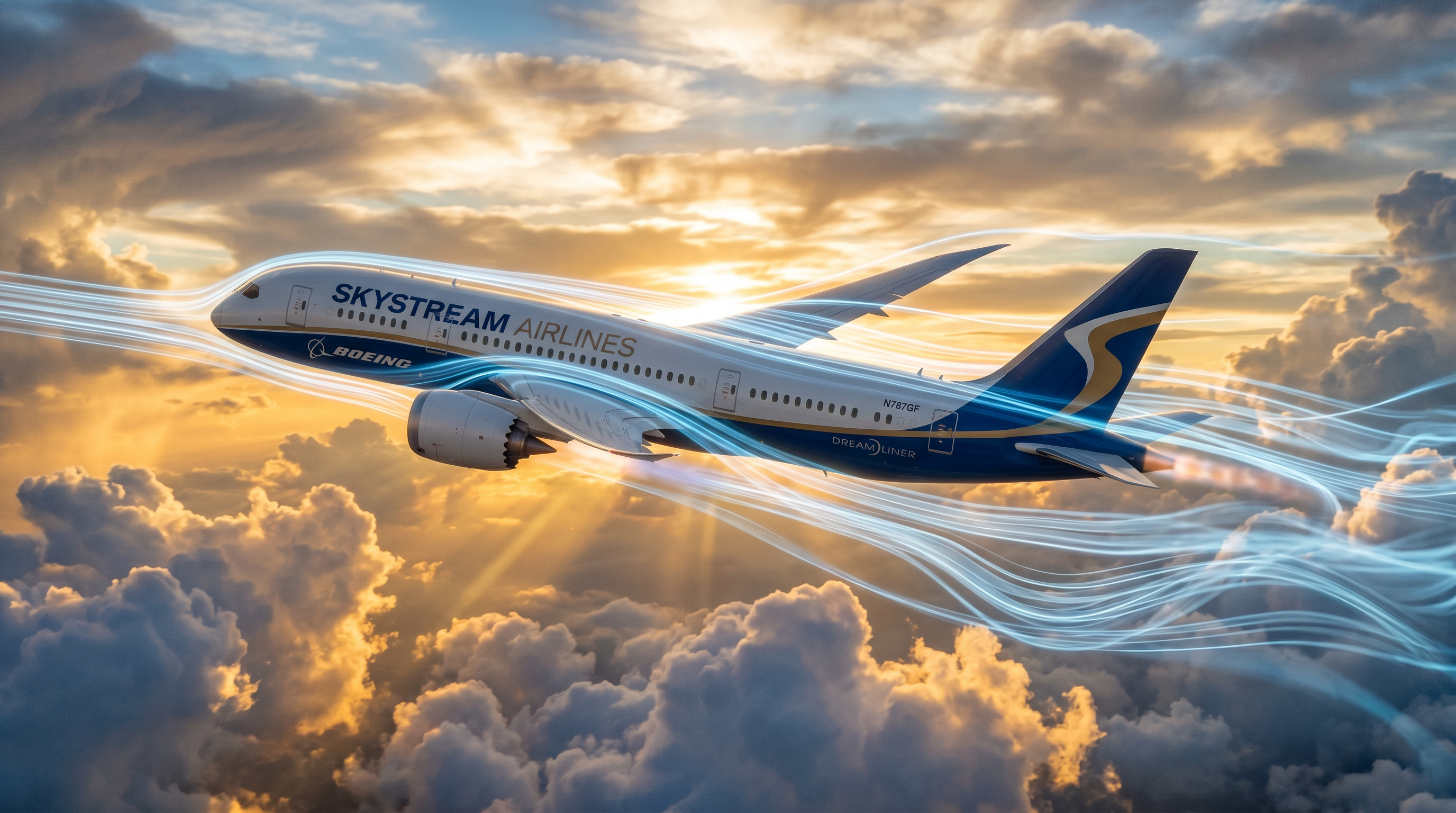
Ground Speed vs Airspeed: Jet Streams, Tailwinds & Why NY to London Flights Fly Faster Eastbound
Imagine boarding a flight from New York to London, sipping your pre-takeoff coffee, and suddenly realizing you'll land in just over five hours—two hours faster than the trip home. No, it's not a mirage or a new supersonic jet. It's the invisible force of wind, turbocharging your ground speed while your airspeed stays steady. This asymmetry in flight times has puzzled countless curious travelers and hooked aviation enthusiasts for decades. At the heart of it? The eternal dance between ground speed vs airspeed, amplified by jet streams and relentless tailwinds.
In this deep dive, we'll unravel these concepts, explore why eastbound journeys across the Atlantic shave precious hours off your itinerary, and peek into the pilot's cockpit for real-world speed calculations. Whether you're a student pilot plotting your first cross-country or a frequent flyer chasing the shortest route, understanding tailwind headwinds and aircraft ground speed will transform how you see every departure board.
Ground Speed vs Airspeed: The Fundamental Difference
Picture an airplane slicing through the sky at a crisp 500 knots—that's about 575 mph or 805 kph, a typical cruising airspeed for a Boeing 787. This is airspeed: the speed relative to the air mass around it, measured by instruments probing the rush of molecules past the fuselage. It's what keeps wings generating lift and engines humming efficiently.
Now enter ground speed, the velocity over the earth's surface. It's airspeed plus or minus the wind. A 100-knot tailwind (115 mph, 185 kph) catapults ground speed to 600 knots (690 mph, 1,110 kph). Flip it: a headwind, and you're crawling at 400 knots (460 mph, 740 kph). This isn't just trivia—it's the crux of aviation speed conversion and why flight times swing wildly.
Why It Matters for Fuel and Flight Planning
Airspeed governs fuel burn; engines don't care about ground progress. But ground speed dictates flight times. A headwind means longer exposure to drag, guzzling more fuel. Pilots obsess over this in pre-flight briefs, balancing routes for optimal wind aloft.
Tailwinds and Headwinds: The Wind's Double-Edged Sword
Winds aloft aren't polite breezes—they're rivers of air roaring at 50 to 150 knots (58 to 172 mph, 93 to 278 kph). A tailwind rides behind you, boosting ground speed like a cyclist drafting a truck. Headwinds fight you head-on, stretching every mile.
Fuel impact? Profound. A 50-knot headwind on a 3,000-mile route adds 30 minutes and hundreds of gallons of jet fuel. Tailwinds save the same, trimming costs and emissions. Airlines reroute obsessively, chasing tailwind headwind forecasts from NOAA and ECMWF models.
On a calm day, airspeed and ground speed align. But introduce wind, and the skies become a battlefield of velocities.
Jet Streams: Earth's High-Altitude Racetracks
How They Form and Where to Find Them
Jet streams are narrow bands of ferocious westerly winds, 5 to 9 miles up, circling the globe like atmospheric conveyor belts. Born from temperature contrasts—cold polar air clashing with warmer tropics—they peak in winter at 120+ knots (138 mph, 222 kph), sometimes surging to 250 knots (288 mph, 463 kph).
The polar jet hugs North America and the Atlantic; the subtropical jet arcs south. Pilots hunt them via weather charts, dipping into cores for tailwinds eastbound, skirting them westbound.
The Transatlantic Superhighway
From New York to London (3,450 miles), the jet stream flows your way. Eastbound? Free ride. Westbound? Brick wall. Average NY to London flight time: 6.5 hours outbound, 7.5 inbound. Winds explain 80% of that gap.
Why NY to London Flights Fly Faster Eastbound
It's physics meets geography. The jet stream roars west-to-east at flight levels 300-400 (30,000-40,000 feet). A 787 cruising at 490 knots airspeed (564 mph, 907 kph) grabs a 150-knot tailwind, hitting 640 knots ground speed (737 mph, 1,186 kph). The return? Subtract 120 knots headwind: 370 knots (426 mph, 685 kph).
- Outbound: Tailwind slashes time by 45-90 minutes.
- Fuel savings: Up to 10% less burn eastbound.
- Real schedules reflect this—check any airline's planner.
Passenger perk: More eastbound flights arrive before dinner in London. Westbound? Brace for a late-night touchdown.
Pilot Speed Calculations: Crunching the Numbers Aloft
Student pilots, listen up: pilot speed calculations start with true airspeed (TAS), corrected for temperature and pressure from indicated airspeed (IAS). Ground speed = TAS ± wind vector, plotted on charts or via FMS (Flight Management Systems).
In-Flight Tools and Adjustments
GPS spits out real-time aircraft ground speed. Pilots tweak altitude—climb 2,000 feet into stronger jet stream core—or divert laterally. Wind speed flight data updates hourly via ACARS datalinks.
Example: Forecast 100-knot tailwind at FL350. Actual? 80 knots. Recalculate ETA, notify ATC, adjust fuel reserves. Precision saves lives and dollars.
Record-Breaking Flights: When Winds Go Wild
Winds don't just nudge—they hurl. In February 2019, British Airways Flight BA112 from New York to London blasted Heathrow in 4 hours 56 minutes, peaking at 825 mph ground speed (1,327 kph)—Mach 1.16 without breaking sound barrier (airspeed stayed subsonic at ~560 mph).
That jet stream trough hit 290 knots. Other extremes: Virgin Atlantic's 2021 eastbound dash at 790 mph ground speed. Westbound records? Rare, as headwinds cap them. Concorde's supersonic era (Mach 2, 1,350 mph) aside, subsonic wind assists rewrite logbooks yearly.
These outliers spotlight ground speed vs airspeed extremes, thrilling enthusiasts who track Flightradar24 for the next monster tailwind.
Quick Reference: Aviation Speed Conversions
Bookmark these for instant knots to mph and kph checks—perfect for pilots and planners.
- 100 knots = 115 mph = 185 kph
- 200 knots = 230 mph = 370 kph
- 400 knots = 460 mph = 740 kph (typical jet approach)
- 500 knots = 575 mph = 926 kph (cruise TAS)
- 600 knots = 690 mph = 1,111 kph (tailwind boosted)
Pro tip: Multiply knots by 1.15 for mph; by 1.85 for kph. Now you're flight-ready.
Ride the Winds Next Time You Fly
Next time you glance at a NY to London flight time, thank the jet stream. From cockpit calculations to record chases, ground speed vs airspeed reveals aviation's thrilling underbelly. Winds whisper secrets of the sky—tailwinds propel dreams forward, headwinds build resilience. Buckle up, check the forecast, and let nature's conveyor belt carry you home faster.