Knots vs MPH in General Aviation: Essential Guide for Student Pilots on Airspeed Units & Conversions
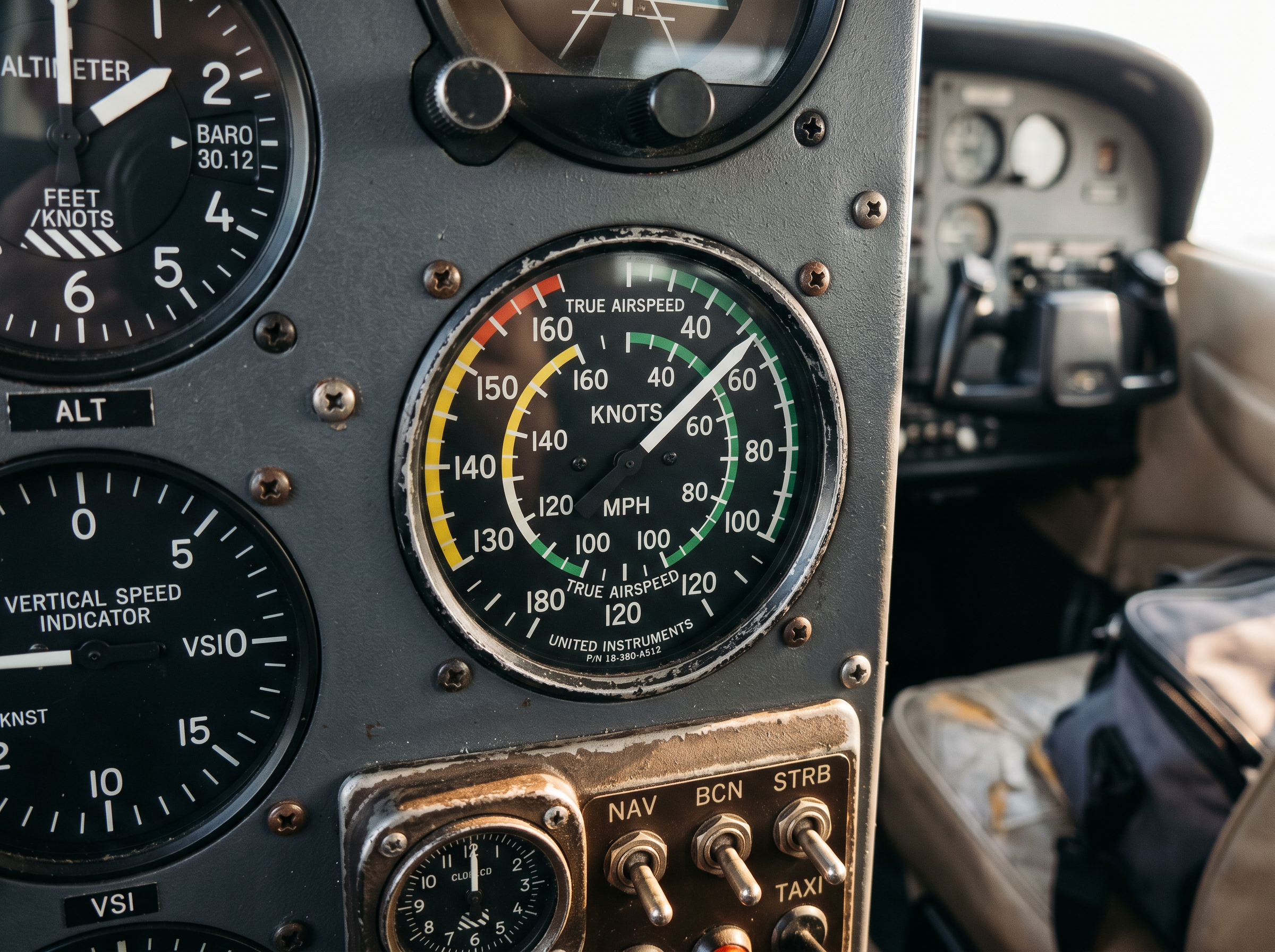
Picture this: You're a student pilot on your first solo cross-country in a rented Cessna 172, cruising at what feels like a comfortable speed. Your eyes flick to the airspeed indicator (ASI). There are two scales staring back—one in knots, the other in MPH. Which one matches your POH's stall speed? Panic flickers as the runway slips behind you. Sound familiar? In general aviation MPH knots confusion trips up countless beginners. But fear not—this guide demystifies knots vs miles per hour flying, arming you with the knowledge to navigate student pilot airspeed units like a pro.
Whether you're prepping for your checkride or just geeking out over GA aircraft speed units, understanding these units is non-negotiable. Knots dominate global aviation, yet MPH lingers in many U.S. general aviation cockpits. We'll unpack the why, how-to's, and must-know conversions—complete with a handy table for convert MPH to knots aviation on the fly.
The Historical Split: Why General Aviation Still Debates MPH vs Knots
Aviation's unit divide traces back to the early 20th century. Nautical miles—and thus knots (one nautical mile per hour)—emerged from maritime tradition. A nautical mile equals one minute of latitude, roughly 6,076 feet, making it ideal for navigation over oceans and skies.
In the U.S., general aviation initially favored statute miles per hour (MPH, based on 5,280-foot miles) for its familiarity to drivers and early pilots. Post-World War II, as air travel globalized, the International Civil Aviation Organization (ICAO) standardized knots in 1947. The FAA followed suit, mandating knots for instrument flight rules in the 1960s.
Yet general aviation MPH knots habits died hard. Manufacturers like Cessna catered to domestic recreational pilots, keeping MPH markings on visual flight rules (VFR) aircraft into the 1970s and beyond. By 1976, FAA Advisory Circulars urged the switch, but older planes and some new designs retained dual scales or MPH primaries. Today, it's a patchwork: knots rule internationally and IFR, but MPH persists in many beginner pilot navigation trainers.
Think of it as aviation's metric-imperial hangover. Europe went knots-only decades ago; U.S. GA? A nostalgic mix.
Decoding the Airspeed Indicator: Cessna Airspeed Indicator Knots MPH and Dual Markings
Single vs. Dual Scales Explained
Most GA aircraft speed units ASIs feature a circular dial with colored arcs: white for flap range, green for normal, yellow caution, redline never-exceed. But the numbers? That's where it gets tricky.
Pure MPH dials have larger outer markings (e.g., Cessna 150s from the 1960s). Knots-only? Crisp inner scales on modern Pipers. Dual-marked—the gold standard—nest knots inside MPH. The inner ring ticks smaller (knots are ~15% slower than MPH), so Vne at 140 knots might arc to 160 MPH outside.
How to Read It Like a CFI
1. Check your aircraft's POH: It specifies primary units (usually knots for performance charts).
2. Align the needle: For a dual ASI, note both scales but prioritize knots for ATC calls (e.g., "maintain 90 knots").
3. Use color arcs universally—they span both scales proportionally.
4. Practice scans: During preflight, memorize your V-speeds in both.
Pro tip: In a Cessna airspeed indicator knots MPH setup, the knot scale is bolder on newer models post-1980. Older ones? MPH dominates visually—train your eye accordingly.
Convert MPH to Knots Aviation: Formulas, Mental Math, and Quick Table
The Math Behind It
One knot = 1.15078 MPH. To convert:
- MPH to knots: MPH × 0.869 (or divide by 1.15)
- Knots to MPH: Knots × 1.15 (or × 1.15078 precisely)
In flight, use the 0.87 rule: 100 MPH ≈ 87 knots. It's 96% accurate for GA speeds—good enough for ballparking Vy or Vx.
MPH to Knots Conversion Table for Common GA Speeds
Bookmark this for your kneeboard. Rounded to nearest knot for practicality.
| MPH | Knots (approx.) |
|---|---|
| 60 | 52 |
| 70 | 61 |
| 80 | 69 |
| 90 | 78 |
| 100 | 87 |
| 110 | 95 |
| 120 | 104 |
| 130 | 113 |
| 140 | 122 |
| 150 | 130 |
| 160 | 139 |
| 180 | 156 |
| 200 | 174 |
Example: Your Cessna's best glide is 65 knots (~75 MPH). Spot 75 on the MPH scale? Needle points to 65 inside. Seamless.
GA Aircraft Breakdown: Which Models Use MPH, Knots, or Both?
No two fleets are alike—always verify per airframe.
- Cessna 152/172: Pre-1978: MPH primary or dual (outer MPH prominent). Post-1980: Knots primary, dual markings. Check your rental—many flight schools fly 1970s birds with Cessna airspeed indicator knots MPH duality.
- Piper Cherokee (PA-28): Almost always knots primary, sometimes dual. Clean, knot-focused dials suit their forgiving handling.
- Mooney M20: Knots-only on most. Speed demons demand precision—no MPH distractions.
- Cessna 182: Similar to 172: Older MPH-heavy, newer knots. Skylanes often dual.
- Piper Tomahawk: Knots primary, dual common in trainers.
Trend: Post-1990s, knots dominate. But flight schools love cheap, older Cessnas—MPH lurks.
Practical Tips for Student Pilots: Avoiding Knots vs Miles Per Hour Flying Pitfalls
Unit mix-ups have felled more than one checkride. Here's your cheat sheet:
- Preflight ritual: Snap photos of the ASI. Note primary scale, tape conversions nearby.
- POH first: All V-speeds in knots. Cross-reference MPH if needed.
- ATC sync: Always report knots (e.g., 55 knots on final). They won't know your dial.
- Mental flashcards: Stall: 45-50 knots (52-58 MPH). Cruise: 100-110 knots (115-127 MPH).
- Dual-scan habit: Train eyes to flick inner/outer. Sim practice if available.
- Fleet consistency: Stick to one type during training—transition slowly.
- Apps & tools: E6B calculators or apps like ForeFlight for instant conversions.
Real-world: On a pattern leg in a Piper, tower calls "slow to 65 knots." Your mental math? ~75 MPH outer needle. Butter the landing.
Fly the plane first, convert second. Muscle memory trumps math every time.
Mastering Airspeed Units: Your Edge in the Pattern and Beyond
From that heart-skipping solo moment to your private pilot certificate, conquering general aviation MPH knots builds confidence. Knots are the universal language; MPH, a quirky American footnote. Armed with history, reads, conversions, and tips, you'll scan any ASI without breaking stride.
Next flight, challenge yourself: Convert on the go, call speeds flawlessly. The sky rewards the prepared. Clear prop—and happy flying.