Vertical Speed Explained: Climb Rates in Feet Per Minute (FPM), Physics, Cockpit Displays & Conversions for Pilots
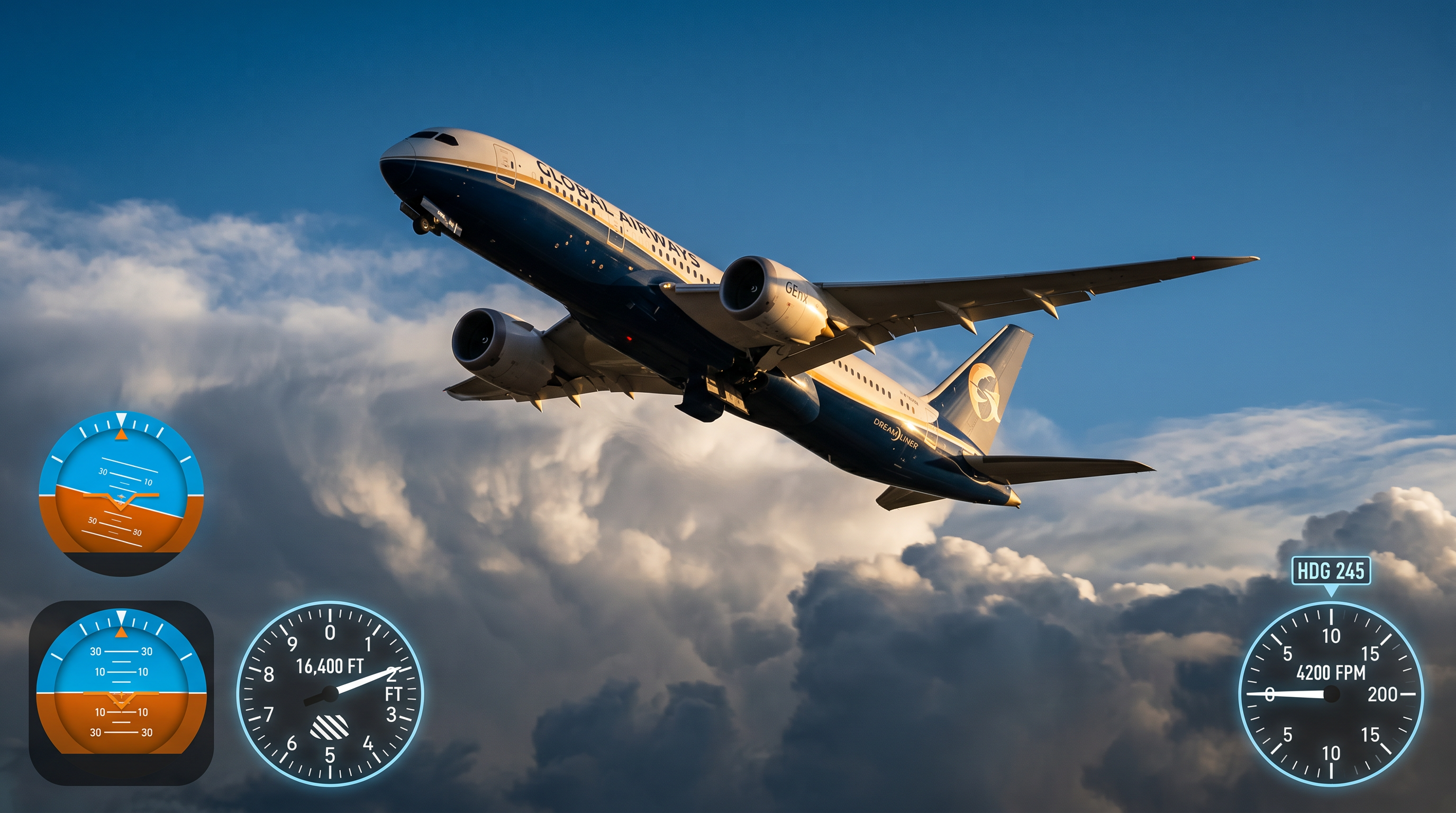
Picture this: You're strapped into a Boeing 737, engines thundering as the runway rushes beneath. The nose lifts, and suddenly the cockpit's vertical speed indicator swings wildly to +2,500 feet per minute. That rush—the sensation of soaring skyward—isn't just thrill; it's the raw measure of vertical speed, the heartbeat of any climb or descent. For aviation enthusiasts, student pilots, and even curious travelers peering into the cockpit, understanding climb rates in feet per minute (FPM) unlocks the magic (and math) behind how planes conquer the skies. In this deep dive, we'll unpack the physics, pilot tactics, cockpit tech, and even handy conversions to make vertical speed as intuitive as checking your watch.
What Is Vertical Speed and Why Feet Per Minute?
Vertical speed, often called climb rate or descent rate, quantifies how quickly an aircraft gains or loses altitude. Measured in feet per minute (FPM), it's the aviation standard for tracking this up-or-down motion. Positive numbers signal a climb—say, +1,500 FPM means ascending 1,500 feet every 60 seconds. Negative values denote descent, like -700 FPM for a gentle glide path.
Why FPM? Feet align with the U.S.-dominated world of aviation altitudes (think Flight Levels in hundreds of feet), and minutes provide a practical scale. It's neither too sluggish for short hops nor frantic for long hauls. Imagine converting miles per hour for vertical movement—that'd be awkward, as planes rarely sustain steep angles long enough to make it meaningful. FPM keeps it cockpit-simple: glance, adjust, repeat.
A Quick Analogy: Elevator vs. Aircraft
Think of your office elevator: It might climb 500 feet per minute on a good day. A commercial airliner blasts past that at takeoff. This scale bridges everyday intuition with high-flying reality, helping student pilots grasp why a 1,000 FPM climb feels urgent yet controlled.
How Pilots Manage Climb and Descent Rates Across Flight Phases
Pilots don't set vertical speed and forget it; they dance with it through every phase. Takeoff demands aggressive climbs to clear obstacles, while cruise conserves fuel with shallower rates. Here's how it unfolds:
- Takeoff and Initial Climb: Full power pushes climb rates to 2,000–4,000 FPM, shedding weight from undercarriage and flaps. Pilots monitor for terrain, noise abatement, and ATC clearances.
- En Route Climb: Rates taper to 1,000–2,500 FPM as speed builds, balancing fuel burn and passenger comfort—no one wants ears popping at 5,000 FPM.
- Cruise Climb: Subtle +500 to +1,000 FPM nudges altitude for efficiency, like stepping on the gas uphill.
- Descent and Approach: Controlled -500 to -2,500 FPM ensures stable approaches. Too steep? Passengers grip armrests. Too shallow? Fuel wasted, runway missed.
- Go-Around: Sudden +2,000 FPM+ to abort and climb anew.
Tools like flight directors and autopilots assist, but captains fine-tune via thrust levers and pitch. It's a symphony of aircraft performance, weather, and regs—miss the briefed descent rate, and vectors turn chaotic.
The Physics: Why Faster Ground Speed Doesn't Mean Faster Climbs
Ever wonder why a zippy private jet at 500 knots ground speed might climb slower than a lumbering prop plane? It's not speed alone—it's power, weight, and angle. Vertical speed stems from excess thrust over drag and gravity. The formula simplifies to: Climb Rate (FPM) ≈ (Excess Power / Weight) × Constant.
Ground Speed vs. Vertical Speed: The Angle Matters
Ground speed is horizontal hustle; airspeed feels the wind. But climb rate = Ground Speed × tan(Climb Angle). A jet screaming at 400 knots with a 5° nose-up yields similar FPM to a 200-knot twin at 10°. Physics caps angles—beyond 15–20°, drag explodes, efficiency tanks.
Heavy airliners lug fuel and pax, demanding runway before sky. Lighter jets punch higher initial rates. Wind shear or thin air? Rates plummet. It's why pilots obsess over aircraft performance charts: density altitude steals your climb like a headwind robs ground speed.
Real-world scene: A 747 lumbers off LAX at 250 knots ground, +2,200 FPM. A Citation jet nearby zips 400 knots but matches at +2,500 FPM—power-to-weight trumps horizontal velocity.
Typical Climb Rates: Commercial Airliners vs. Private Jets
Commercial airliners prioritize economy and smoothness. Expect:
- Initial climb: 2,000–3,000 FPM (A320, 737).
- Above 10,000 ft: 1,500–2,500 FPM.
- Descent: -1,000 to -2,000 FPM for 3° glideslope.
Private jets flex higher thrust-to-weight:
- Gulfstream G650: 4,000–5,000 FPM initial.
- Light jets (Phenom 300): 3,000–4,000 FPM.
- Descent: -2,500 to -4,000 FPM, agile for short fields.
Vars: Load, temp, runway. Hot/high days? All rates dip 20–30%.
Cockpit Instruments: Reading Vertical Speed Like a Pro
Cockpit instruments make vertical speed glanceable. Core is the Vertical Speed Indicator (VSI):
- VSI: Classic needle gauge, ±6,000 FPM scale. Differential pressure senses altitude change.
- IVSI (Instantaneous VSI): Faster response, no lag—gold for turbulence.
- PFD (Primary Flight Display): Glass cockpits show digital tape or arc, integrated with attitude, altitude. Trend vectors predict 6–30 sec ahead.
Red zones flag extremes. Pilots cross-check with GPS altimeter trends for precision.
FPM Conversions: Practical Tables for Global Pilots
Aviation's bilingual—FPM rules U.S., metrics elsewhere. Quick math:
- 1 FPM = 0.00508 m/s (divide FPM by 196.85).
- 1 m/s = 196.85 FPM.
- To MPH (vertical): FPM / 88 (rough, as it's not horizontal).
| FPM | m/s | m/min | km/h (vert.) | MPH (vert.) |
|---|---|---|---|---|
| 500 | 0.0025 | 0.152 | 0.55 | 0.34 |
| 1,000 | 0.0051 | 0.305 | 1.10 | 0.68 |
| 2,000 | 0.0102 | 0.610 | 2.19 | 1.36 |
| 3,000 | 0.0152 | 0.914 | 3.29 | 2.04 |
| -1,000 | -0.0051 | -0.305 | -1.10 | -0.68 |
Pro tip: Apps like ForeFlight auto-convert. For international ops, memorize 1,000 FPM ≈ 5 m/s.
Tying It All Together: Vertical Speed in the Big Picture
Vertical speed isn't isolated—it's the vertical thread weaving through ground speed, airspeed, and performance. A jet's blistering horizontal dash means little without climbing chops to match. Next time you're wheels-up, eyes on that VSI needle: It's not just numbers; it's the physics of flight, pilot prowess, and the pull of gravity yielding to human will. Whether student pilot charting first solo or traveler musing from 35,000 feet, grasp feet per minute, and the skies feel a little less mysterious.