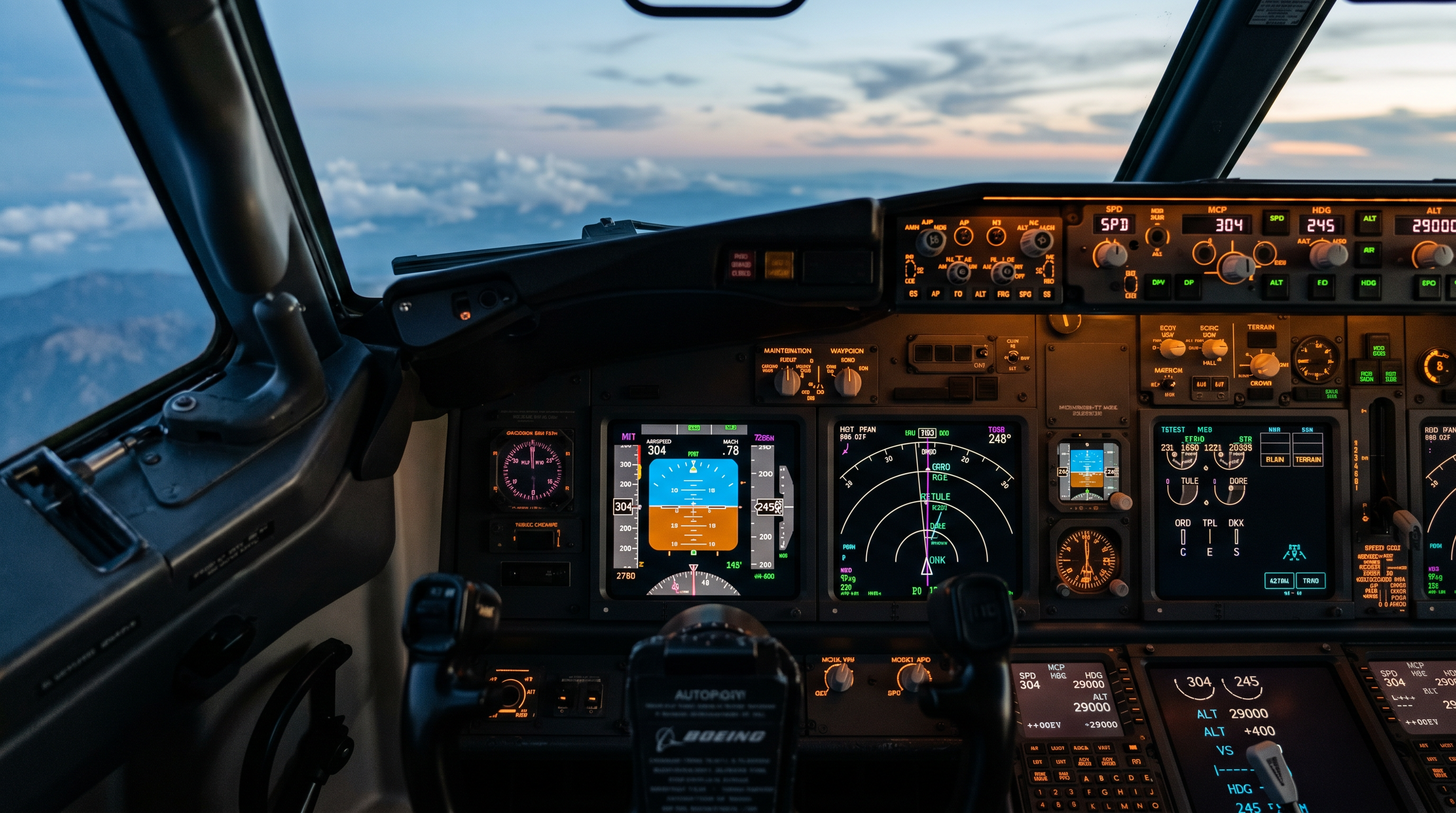
Why Do Pilots Use Knots Not MPH? Unraveling Aviation's Nautical Speed Secrets & Easy Conversions
Picture this: You're strapped into a Boeing 737, cruising at 30,000 feet, as the captain's voice crackles over the intercom. "We're making 450 knots," she announces casually. Knots? Your road-trip-loving brain scrambles— is that fast? Faster than the 65 mph highway limit back home? Welcome to the quirky world of aviation speed units, where pilots shun familiar MPH for something straight out of a pirate movie. But there's method to this nautical madness, rooted in history, geometry, and global standards. In this deep dive, we'll unravel why pilots use knots, decode nautical miles vs statute miles, and arm you with effortless knots to mph and knots to kph conversions. Whether you're a student pilot eyeing your first solo or a curious traveler gazing at contrails, buckle up—this is aviation's speed story.
The Maritime Origin of Knots: A Rope, the Sea, and Speedy Sailors
Long before jet engines roared, sailors needed a way to gauge speed across vast oceans without fancy gadgets. Enter the knots aviation history that predates planes by centuries: the log-line. Imagine a wooden ship slicing through Atlantic swells in the 1600s. The quartermaster hurls overboard a reel of rope, studded every 47 feet, 3 inches with knots carved from wood. A sandglass ticks for 28 seconds—the infamous "half-minute glass." As the ship surges forward, knots slip past a marked line. Count them up: five knots mean five of those rope segments vanished in that blink. Multiply by two for nautical miles per hour. Boom—instant speed.
This maritime history wasn't just practical; it was poetic. The term "knot" stuck because, well, it was literal. By the 19th century, mechanical logs refined it, but the name endured. Fast-forward to skies: Early aviators, many ex-naval officers, borrowed this battle-tested system. Why reinvent the wheel (or propeller) when the sea's lingo worked?
Why Aviation Chose Nautical Miles Over Statute Miles
Aviation's love affair with nautical units stems from navigation's core challenge: plotting courses over a spherical Earth. Landlubbers use statute miles (5,280 feet), fine for straight highways. But pilots and sailors chart great-circle routes, where distances curve with the planet.
Enter the nautical mile definition: one minute of latitude arc along a meridian. Earth's equator-to-pole circumference spans 21,600 nautical miles (360 degrees × 60 minutes). One NM equals roughly 6,076 feet—about 15% longer than a statute mile. This ties directly to charts: Glance at a sectional, and latitude lines are pre-scaled in NM. Measuring 1 degree? That's 60 NM, no calculator needed. Aviation adopted it in the 1920s as planes went international, mirroring maritime maps for seamless transoceanic flights.
Nautical Miles vs Statute Miles: The Precise Math
Precisely, 1 NM = 1.15078 statute miles (or 1.852 kilometers). Why the odd figure? It averages Earth's slightly oblate shape—flatter at poles, bulgier at equator. At 40°N (think New York to London), one minute of latitude is bang-on 6,076.12 feet. Statute miles? Arbitrary, from old English furlongs. Aviators picked utility over tradition.
Knots as the International Aviation Standard: ICAO's Global Mandate
By the mid-20th century, chaos reigned: Americans stuck to MPH, Europeans to KPH. Enter ICAO (International Civil Aviation Organization), the UN's aviation arm, standardizing aviation speed units in knots since 1944's Chicago Convention. Why? Uniformity saves lives—miscommunications plummet when Tokyo ATC and Atlanta pilots speak the same speed tongue.
IMO (International Maritime Organization) echoes this for ships. Today, why pilots use knots boils down to ICAO standards: Every Flight Management System, ATC clearance, and instrument defaults to knots. A 747 crossing the Pacific? 490 knots groundspeed. Crystal clear worldwide.
High-Altitude Twist: Why Mach Numbers Replace Knots
The Speed of Sound Shakes Things Up
Knots shine below 10,000 feet, but at jet altitudes, air thins. True airspeed (TAS) in knots soars as density drops—250 knots indicated might mean 450 TAS. Enter Mach number: speed as a fraction of local sound speed (Mach 1 ≈ 661 knots at sea level, dipping to 573 at 35,000 feet).
Pilots transition around FL300 (30,000 feet). A Concorde screamed at Mach 2.0; your 787 dreams at Mach 0.85. Why? Compressibility effects near Mach 1 demand it—drag surges, controls buffet. ATC clears "maintain Mach .80," oblivious to exact knots, which vary with temperature.
Real-world example: During a transatlantic hop, descent swaps Mach for knots at 10,000 feet. Seamless, thanks to training.
Mastering Speed Conversions: Knots to MPH, KPH, and Practical Examples
Pilot terminology like knots can baffle, but conversions are straightforward. Memorize: 1 knot = 1.15078 MPH or 1.852 KPH. Double for quick math—1 knot ≈ 1.15 MPH, 1.85 KPH.
- 150 knots (typical Cessna approach): 150 × 1.15 = 172.5 MPH; ×1.85 ≈ 277 KPH.
- 500 knots (Boeing 777 cruise): 575 MPH; 925 KPH—faster than a bullet train!
- 90 knots (Cirrus SR22 stall speed): 103 MPH; 167 KPH.
Quick Conversion Formulas
Knots to MPH: Knots × 1.15078. KPH to knots: KPH ÷ 1.852. Apps like ForeFlight or E6B whiz calculate, but pilots drill multiples of 10: 100 knots = 115 MPH, 200 = 230, etc.
Pro tip: In the cockpit, V-speeds (stall, rotate) are knots forever—no conversion mid-maneuver.
Tools for Travelers, Students, and Enthusiasts
Frequent flyers, decode your flight plan. Apps like Flightradar24 show groundspeeds in knots—convert on the fly with phone calculators or sites like speedconversion.com. Student pilots: Nail knots to mph for cross-country briefs. Enthusiasts tracking airshows? A P-51 Mustang at 400 knots hits 460 MPH—mind-blowing.
Bonus: Wind affects groundspeed. Headwind chops 30 knots off a 450-knot jet? You're crawling at 420—still 483 MPH, but delayed.
Soaring Beyond the Numbers: Aviation's Enduring Legacy
From knotted ropes tossed into stormy seas to Mach dashes over continents, aviation's speed lingo honors precision born of peril. Next time a pilot chirps "250 knots," you'll nod knowingly—not MPH, but a nod to navigators who tamed sky and sea. Whether plotting your next adventure or dreaming of wings, understanding these units unlocks aviation's poetry. Clear skies, and happy converting.