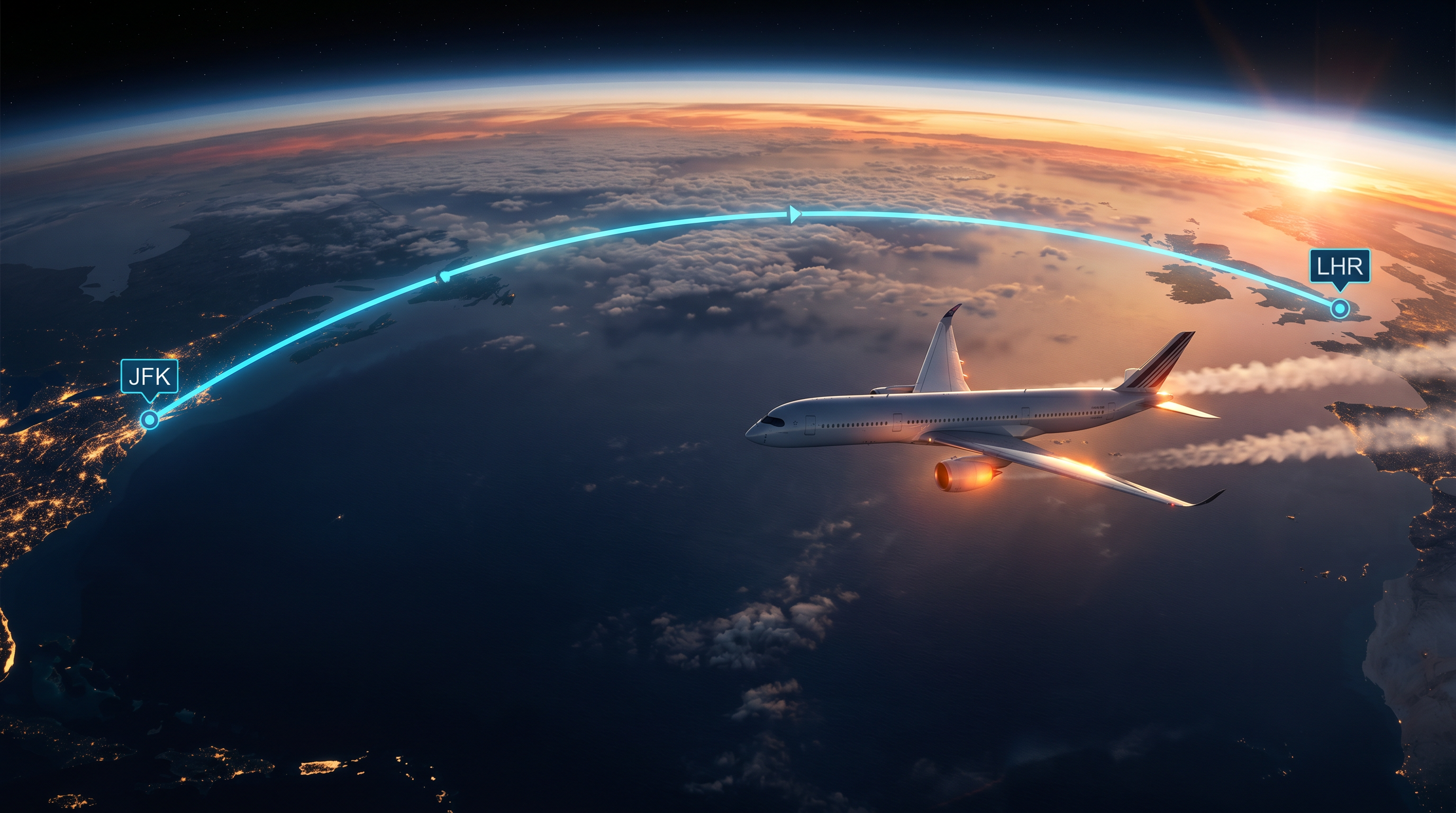
From 35.59 Knots to Mach 2.04: The Ultimate Guide to Transatlantic Crossing Records
Picture this: a gleaming silver bird screams across the Atlantic at twice the speed of sound, shaving hours off a journey that once took brave souls weeks of pounding waves. Or rewind to 1952, when the SS United States sliced through the ocean at 35.59 knots, claiming the prized Blue Riband amid cheers from New York Harbor. Transatlantic crossing records aren't just numbers—they're tales of human ambition, technological triumphs, and the relentless chase for speed. Whether you're a history buff dreaming of ocean liners, an aviation enthusiast tracking flight paths, or a traveler curious about your next NYC to London hop, this guide dives deep into the records, breakdowns, and future frontiers.
From lumbering sailing ships to supersonic icons like Concorde, we'll unpack every major milestone with precise speed unit conversions—your real-time reference for knots to mph, kph to knots, and beyond. Buckle up as we journey from sea to sky.
The Blue Riband Era: Maritime Transatlantic Crossing Records
Before wings ruled the skies, the Atlantic was a proving ground for ocean liners. The Blue Riband, awarded since 1838 for the fastest eastbound and westbound transatlantic crossings between Ambrose Light (NYC) and Bishop Rock (UK), symbolized supremacy. Speeds crept up from clipper ships at 17 knots to turbocharged behemoths.
SS United States: The Unbeaten Champion at 35.59 Knots
Launched in 1952, the SS United States—affectionately the 'Millionaire's Ship'—set records that stand unbroken today. On its maiden voyage, it blitzed the eastbound route in 3 days, 10 hours, 40 minutes at an average 35.59 knots over 2,942 nautical miles. Westbound followed at 34.51 knots. No liner has touched it since.
Instant Speed Conversion Breakdown:
- Knots: 35.59 kt
- MPH: 40.97 mph (35.59 × 1.15078)
- KPH: 65.91 kph (35.59 × 1.852)
- Mach: 0.054 (35.59 / 661 kt sea-level speed of sound)
Imagine the thunder of 240,000 horsepower propellers churning foam-white wakes, passengers toasting in Art Deco lounges as Europe loomed in days, not weeks. This record endures, a testament to engineering before aviation dominance.
Subsonic Jets Conquer the Skies: Fastest Flights NYC to London
Jets arrived in the 1950s, collapsing transatlantic times from days to hours. Early records fell to the de Havilland Comet and Boeing 707, but competition heated up with business jets and fuel-efficient airliners chasing subsonic supremacy—typically 5-6 hours for the 2,995-nautical-mile NYC-London great circle.
Modern Subsonic Attempts: The 5h13m Benchmark
Subsonic records hover around 5 hours eastbound, turbocharged by jet streams. A standout: a 2020 British Airways Boeing 787 Dreamliner clocked 5 hours 13 minutes NYC to London, averaging ~575 knots. Business jets like Gulfstreams have dipped under 5 hours westbound, but commercial passenger records respect the ~5h13m mark for eastbound dashes.
Speed Breakdown for ~5h13m Flight (2,995 nm):
- Average Knots: ~575 kt
- MPH: ~662 mph
- KPH: ~1,065 kph
- Mach: ~0.87 (cruise at 0.85 Mach)
These feats blend airliner tech with perfect winds, turning routine flights into record contenders. Travelers, note: your next redeye could flirt with history.
Concorde Speed Record: Mach 2.04 Glory in 2h52m
Enter the supersonic revolution. The Anglo-French Concorde, operational 1976-2003, redefined transatlantic travel. Its crowning jewel: British Airways Flight BA002 on February 7, 1996, shattering the NYC-London record in 2 hours, 52 minutes, 59 seconds—averaging 1,038 knots over 3,461 statute miles.
Cruising at 60,000 feet, Concorde hit Mach 2.04, outpacing jet streams with droop-nose flair and afterburner roars. No subsonic has come close; it's the gold standard for fastest flight NYC to London.
From takeoff rumble to landing champagne, 2h53m felt like a blink—revolutionizing elite travel until economics grounded it.
Concorde Speed Record Instant Speed Conversion:
- Peak Knots: 1,176 kt
- Peak MPH: 1,354 mph
- Peak KPH: 2,179 kph
- Mach: 2.04
Jet Stream Impact: Nature's Turbo for Transatlantic Records
Eastbound flights (NYC to London) ride the jet stream—a roaring river of air at 30,000-40,000 feet, boosting groundspeeds by 100-250 knots. Subsonic records like 5h13m owe half their speed to this invisible ally. Concorde pierced above it, but westbound hauls lag 1-2 hours. Travelers: check tailwinds for your itinerary; they dictate if your flight joins the transatlantic crossing records conversation.
The '8 and 5' Rule: Instant Speed Conversion for Travelers
Lost in units mid-flight briefing? Master the '8 and 5' rule—your real-time reference for knots to mph and kph to knots mental math. Perfect for aviation buffs eyeing cockpit readouts or maritime fans parsing liner stats.
Knots to MPH: The '8' Trick
Multiply knots by 8, divide by 7 (8/7 ≈ 1.143, spot-on for 1.151). Example: SS United States 35.59 kt × 8 / 7 ≈ 40.7 mph (actual 41 mph). Punchy and precise.
KPH to Knots: The '5' Trick
Divide kph by 2, multiply by 1.08 (or subtract 8% from half: 5/9.26 ≈ 0.54). Example: 65.91 kph / 2 × 1.08 ≈ 35.6 kt. Quick for international travel dashboards.
- Pro Tip: Practice on Concorde's 2,179 kph → /2 =1,089.5 ×1.08 ≈1,176 kt.
- Reverse: MPH to knots ≈ ×7/8 (0.875).
These hacks turn any traveler into a speed savant—no app needed.
Supersonic Travel Future: Reviving Transatlantic Speed Dreams
Concorde's shadow looms, but horizon gleams. Boom Supersonic's Overture aims for Mach 1.7 NYC-London in under 3.5 hours by 2029, with sustainable fuels. NASA's X-59 quests quieter booms, potentially unlocking overland superspeed. Startups like Hermeus eye Mach 5. Meanwhile, SpaceX Starship whispers suborbital hops in 30 minutes—but that's another frontier.
Will we see Mach 2.5 records? Electric propulsion? The chase continues, blending nostalgia with next-gen thrills.
Charting Your Place in Transatlantic History
From SS United States' 35.59 knots to Concorde's Mach 2.04 blaze, transatlantic crossing records chronicle our speed obsession. Subsonic jets at 5h13m keep the flame alive, jet streams add drama, and tomorrow's supersonic revival beckons. Arm yourself with '8 and 5' Instant Speed Conversion—next time winds howl eastbound, you'll know if your flight's a contender. The Atlantic awaits: faster, always faster.