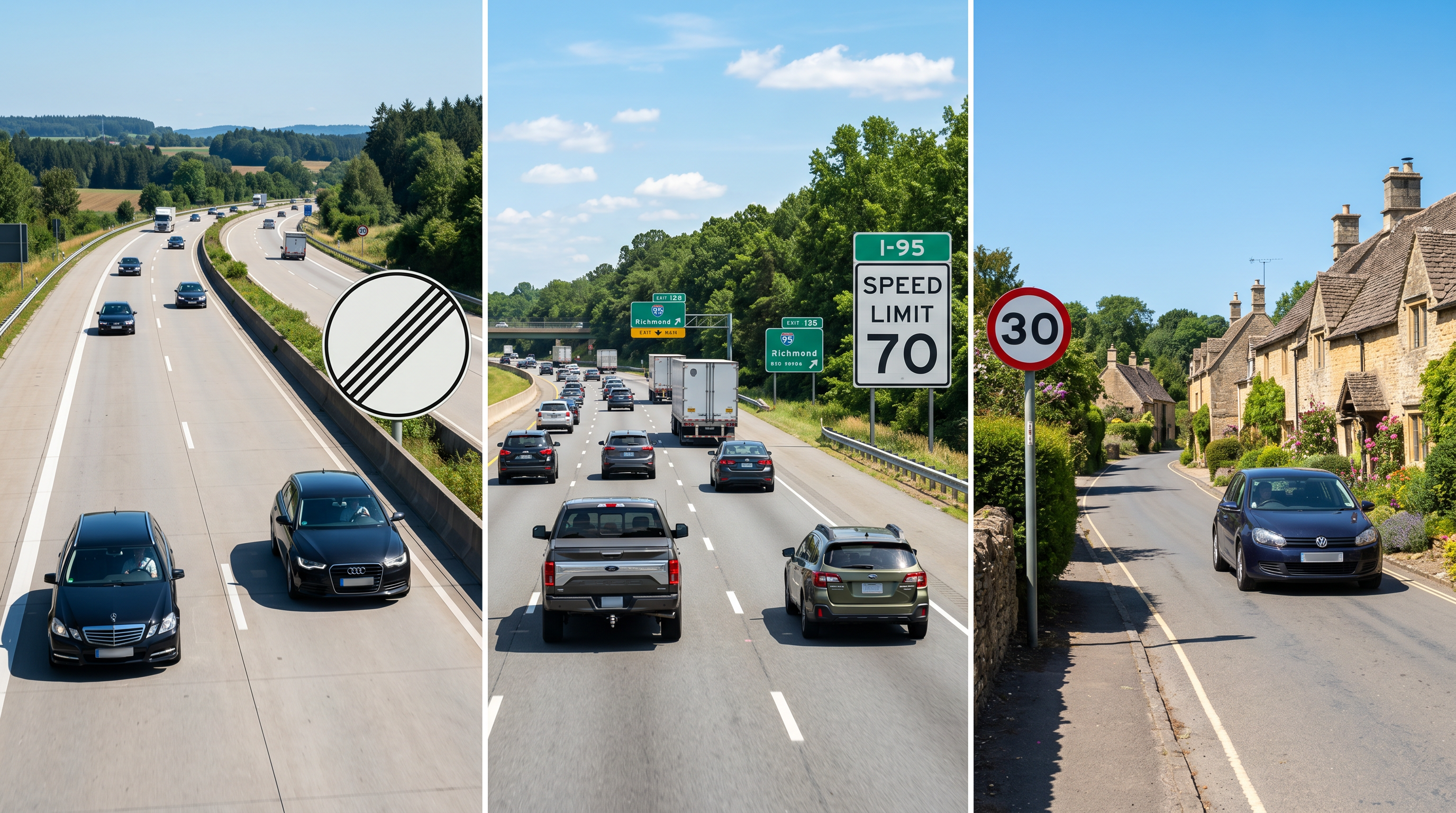
Speed Limits Around the World: From Unlimited Autobahns to 20mph Zones – Global Comparison for Travelers
The Thrill and Caution of Speed Limits Around the World
Imagine flooring it on a sleek German Autobahn, wind roaring past at over 150 mph, only to brake hard for a 20 mph school zone in Edinburgh the next week. Speed limits around the world aren't just numbers on signs—they're a patchwork of culture, engineering, and safety philosophy that can catch even seasoned travelers off guard. For curious drivers and globetrotters, understanding international speed limits is more than trivia; it's essential for avoiding fines, accidents, and rental car blacklisting. Whether you're plotting a road trip across Europe or navigating U.S. interstates, this global speed limit comparison reveals why what flies in one country could land you in hot water elsewhere.
Road safety varies wildly: Germany's trust in driver judgment contrasts with the UK's blanket 20 mph urban zones. These differences stem from data-driven policies balancing mobility and lives saved. In 2022 alone, the World Health Organization reported over 1.1 million road deaths globally, underscoring why travelers must master driving laws by country before hitting the gas.
From Blazing Fastways to Crawl Zones: Highest and Lowest Speed Limits
The Need for Speed: Fastest Roads on Earth
Germany's Autobahn steals the spotlight with derestricted sections allowing speeds up to 300 km/h (186 mph) in theory, though practical limits hover around 130-160 km/h (81-100 mph). Poland edges Europe for official highs at 140 km/h (87 mph) on select motorways. Venture to Abu Dhabi, where highways permit 160 km/h (99 mph), demanding unflinching focus amid desert straights. The Isle of Man, that quirky Crown Dependency, has no limits on rural roads—perfect for motorbike enthusiasts, but low traffic and strict licensing keep it sane.
Slow and Steady: The World's Strictest Limits
Flip to the low end: The UK rolls out 20 mph (32 km/h) zones in cities like London and Paris equivalents in Scandinavia, slashing urban crashes by up to 40% per studies from Transport for London. School zones worldwide dip to 15-25 mph (24-40 km/h)—think 20 km/h (12 mph) in Australia near playgrounds. Narrow mountain passes, like Italy's Stelvio or Bolivia's Yungas Road (Death Road), enforce 30-50 km/h (19-31 mph) curves where one mistake spells disaster. Practical tip for travelers: Download apps like Waze for real-time zone alerts; ignoring them in Finland's zero-tolerance areas means €100+ fines.
The German Autobahn: Myth vs. Reality
The Autobahn's "no speed limit" fame is half-true. Only about 70% of its 13,000 km (8,000 miles) lack a cap; the rest cap at 120-130 km/h (75-81 mph) due to curves, merges, or construction. A recommended 130 km/h (81 mph) guides prudent drivers, enforced by signs reading richtgeschwindigkeit. Lane discipline is ironclad: right lane for cruising, left for passing only—violate it, and face points or bans.
Safety surprises: Germany's Autobahn fatality rate is among Europe's lowest at 1.6 per billion km traveled (per EU stats), thanks to superior engineering—wide lanes, emergency shoulders, and flawless surfaces. Compare to U.S. highways at 5.7. Yet, high speeds amplify risks; a 2019 study showed crashes triple above 150 km/h (93 mph). Tip: Rent a car with adaptive cruise control for Autobahn confidence.
How Governments Set Speed Limits: Engineering Meets Data
No arbitrary picks here—limits blend road design (lane widths over 3.5m/11ft allow higher speeds), sight lines, pavement quality, and crash history. Dense Poland sets 140 km/h (87 mph) on flat, divided motorways; hilly Bulgaria sticks to 120 km/h (75 mph). Population weighs in: Urban Netherlands caps at 100 km/h (62 mph) daytime, 130 km/h nights on smart motorways adjusting via sensors.
- Road Geometry: Straightaways get boosts; S-bends get cuts.
- Traffic Density: High-volume U.S. freeways average 65-75 mph (105-120 km/h).
- Safety Records: Sweden's Vision Zero drops limits post-accident spikes.
Historical shifts matter—1970s oil crises birthed 55 mph U.S. caps; now states like Texas push 85 mph (137 km/h). Travelers: Check ADAC or equivalent apps for updates.
No Limits? Surprising Spots Without Official Speed Caps
Rare, but real: Isle of Man's rural roads trust locals' skill amid sparse traffic—works due to 85,000 residents policing themselves. Australia's remote Outback highways like Stuart suggest 130 km/h (81 mph) but lack hard limits on empty stretches; vastness and kangaroos demand caution. India's NH44 expressways flirted with no caps historically, now formalized at 100 km/h (62 mph). These thrive on low density; pile on tourists, and chaos ensues—see U.S. rural roads advising but not always enforcing.
Why it works (sometimes): Self-regulation via peer pressure and tech like dashcams. But data warns: Unlimited correlates with higher severe crashes per km.
Enforcement Styles: Cameras, Cops, and Tolerance Globally
UK's 7,500+ speed cameras net millions in fines yearly, with 10% + 2 mph (e.g., 42 mph on 70 mph roads) tolerance. France's automated gantries snap at exact limits, doubling in construction zones. U.S. state troopers radar from overpasses; Europe favors unmarked Audis.
- Nordics: Zero tolerance—5 km/h (3 mph) over in Norway? 5,000 NOK fine.
- Australia: P-platers halve adult limits.
- U.S.: Varies wildly; Virginia's 80 mph (129 km/h) with trooper discretion.
Fines escalate: €1,000+ in Switzerland for 25 km/h over. Tip: Rental firms report violations—pay promptly to avoid holds.
International Speed Limit Comparison Table
| Country | Highway (km/h / mph) | Urban (km/h / mph) |
|---|---|---|
| Germany | 130-∞ / 81-∞ | 50 / 31 |
| Poland | 140 / 87 | 50 / 31 |
| USA (avg) | 105-137 / 65-85 | 40-72 / 25-45 |
| UK | 113 / 70 | 48 / 30 (20 zones) |
| France | 130 / 81 | 50 / 31 |
| Australia | 110-130 / 68-81 | 50 / 31 |
| UAE (Abu Dhabi) | 160 / 99 | 60 / 37 |
| Sweden | 120 / 75 | 50 / 31 |
| Japan | 100 / 62 | 40-60 / 25-37 |
| Brazil | 120 / 75 | 60 / 37 |
| South Africa | 120 / 75 | 60 / 37 |
| India | 100-120 / 62-75 | 50 / 31 |
Note: Limits vary by road/zone; always verify locally.
Key Takeaways for Savvy Global Drivers
Speed limits around the world showcase humanity's tug-of-war between freedom and safety—from Autobahn thrills to 20 mph crawls. Master this speed limit comparison to travel smarter: Convert units instantly with SpeedShift Converter, obey locals over GPS hunches, and embrace the journey's pace. Safe roads ahead—wherever they lead.