Escape Velocity Unleashed: Why 11.2 km/s Frees You from Earth, ISS Speed in MPH & km/s, and Fastest Spacecraft Ever
Imagine firing a cannonball straight up from Earth's surface. At first, it arcs gracefully into the sky, slowing as gravity tugs it back. But crank up the speed, and something magical happens: the cannonball never returns. It slips Earth's gravitational clutches forever. That critical threshold? Escape velocity—11.2 kilometers per second. This isn't science fiction; it's the raw physics powering every rocket launch and deep-space probe. For space enthusiasts, students, and anyone mesmerized by rocket science, understanding these blistering speeds unlocks the universe's grandest adventures.
In this deep dive into space travel speed, we'll demystify escape velocity, contrast it with orbital speed, clock the International Space Station's (ISS) zippy pace in km/s, MPH, and KPH, spotlight the fastest spacecraft ever, and explore interplanetary travel velocities. We'll even convert km/s to MPH and KPH with handy tables, using everyday analogies to make these cosmic velocities feel visceral. Buckle up—your sense of speed will never be the same.
What Is Escape Velocity, and Why 11.2 km/s for Earth?
Escape velocity is the minimum speed needed for an object to break free from a celestial body's gravity without further propulsion. It's like giving a frog just enough hop to clear a pond—no engines required after launch. For Earth, that magic number is approximately 11.2 km/s (about 40,320 km/h or 25,020 mph) from the surface.
Why this exact figure? Newton's law of universal gravitation meets conservation of energy. The formula is vesc = √(2GM/r), where G is the gravitational constant, M is Earth's mass (5.97 × 10²⁴ kg), and r is Earth's radius (6,371 km). Plugging in the numbers yields 11.186 km/s—rounded to 11.2 km/s for everyday use. Atmosphere adds drag, but in vacuum, this speed ensures an object coasts to infinity.
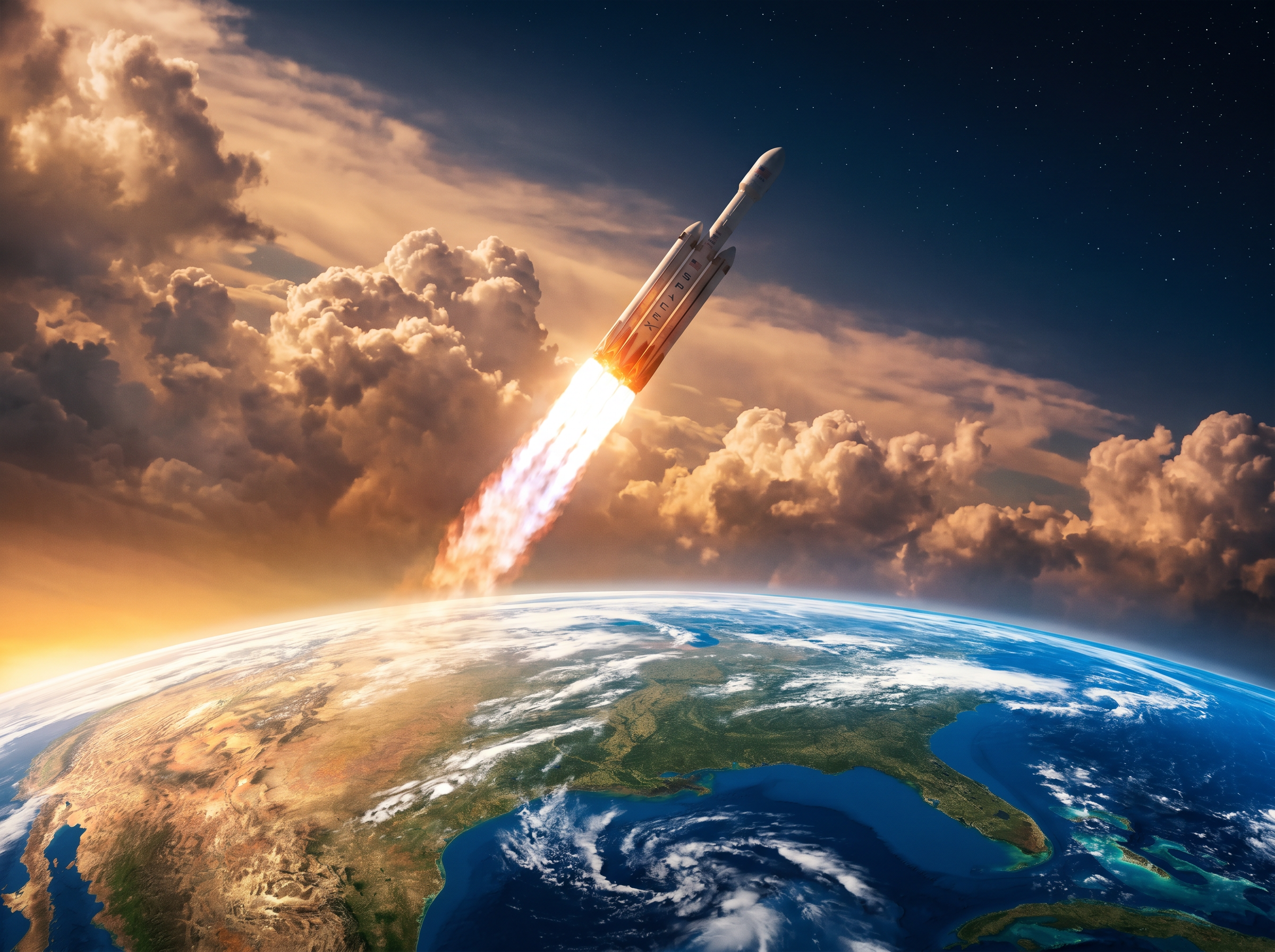
Picture a Saturn V rocket: it doesn't hit 11.2 km/s instantly. It sheds stages, fighting air resistance, until reaching orbit first—then boosts for escape. Without this velocity, even infinite fuel couldn't pry you loose; gravity wins the tug-of-war.
Orbital Speed vs. Escape Velocity: Circling vs. Conquering Gravity
The Key Difference in Rocket Science
Orbital speed is slower—about 7.8 km/s for low Earth orbit (LEO). Here, you're not escaping; you're falling endlessly around Earth. Constant freefall at the right sideways velocity creates a stable orbit, like a ball swung on a string that never slackens.
Escape velocity is √2 times orbital speed (11.2 / 7.8 ≈ 1.44). Orbital motion balances gravity with centrifugal force; escape dumps all kinetic energy into overcoming potential energy. Rockets exploit this: orbit first (cheaper), then burn for escape.
To leave Earth behind forever, you need roughly 44% more speed than circling it—a profound reminder of gravity's tenacious grip.
ISS Speed: 17,150 MPH, 27,600 KPH, and 7.67 km/s Explained
The ISS hurtles at ISS speed of 7.67 km/s to maintain its 400 km altitude orbit. That's 27,600 km/h (17,150 mph)—fast enough to lap the planet every 90 minutes, witnessing 16 sunrises daily.
Convert it yourself: 1 km/s = 3,600 km/h = 2,237 mph. So, 7.67 km/s × 3,600 = 27,612 km/h; × 2,237 ≈ 17,150 mph. Astronauts feel weightless not from speed, but perpetual fall.
Handy Conversion Tables: km/s to MPH and KPH
These tables make km/s to mph and km/s to kph a breeze for space travel speed calcs.
| km/s | km/h | mph |
|---|---|---|
| 1 | 3,600 | 2,237 |
| 5 | 18,000 | 11,185 |
| 7.67 (ISS) | 27,612 | 17,150 |
| 7.8 (LEO) | 28,080 | 17,450 |
| 11.2 (Escape) | 40,320 | 25,020 |
Pro tip: Multiply km/s by 3,600 for KPH, by 2,237 for MPH.
The Fastest Spacecraft Ever: Parker Solar Probe's Mind-Bending Pace
Crown goes to NASA's Parker Solar Probe. In late 2024, it smashed records at 635,266 km/h—176 km/s or 394,736 mph—skimming 6.9 million km from the Sun. That's 0.06% lightspeed, using Venus gravity assists to slingshot faster.
From Earth launch (43 km/s initial), solar gravity accelerates it. By 2025, expect 200 km/s. Compare: New Horizons to Pluto hit 16.26 km/s; Voyager 1 coasts at 17 km/s.
- Parker Solar Probe: 176 km/s (insane solar dive)
- Helios 2: 70 km/s (1976 record)
- Voyager 1: 17 km/s (interstellar wanderer)
Speeds for Interplanetary Travel: Mars, Jupiter, and Beyond
Hohmann Transfers and Gravity Slingshots
Interplanetary travel demands hyperbolic excess speeds atop orbital velocity. Earth to Mars: ~11 km/s total (3 km/s excess). To Jupiter: 8-10 km/s excess. Slingshots boost gratis—Voyager used Jupiter for 40 km/s kicks.
Starship aims for 7-12 km/s Mars injections. Future nuclear propulsion? 20-50 km/s for outer planets.
Making Abstract Speeds Real: Everyday Analogies and Comparisons
These velocities dwarf daily life. A bullet? 0.9 km/s. Sound barrier? 0.34 km/s. Bullet train? 0.1 km/s. Commercial jet? 0.25 km/s.
- ISS (7.67 km/s): 45x faster than a 747, circles Earth 16x/day.
- Escape (11.2 km/s): Cross Atlantic in 4 minutes.
- Parker (176 km/s): Earth to Moon in 5 minutes; Sun in 3 days (vs. 5 months for Parker).
Envision: At escape velocity, you'd outrun a SpaceX Falcon 9 (reentry ~7 km/s) and feel the cosmos open wide.
| Speed | km/s | Comparison |
|---|---|---|
| Car (100 km/h) | 0.028 | Highway cruise |
| Jet (900 km/h) | 0.25 | NY to LA in 3 hrs |
| ISS | 7.67 | 30x jet |
| Escape | 11.2 | 45x jet |
| Parker Probe | 176 | 700x jet |
The Cosmic Horizon: What's Next for Spacecraft Speed?
From 11.2 km/s escapes to Parker's solar sprints, these speeds propel humanity starward. Nuclear thermal rockets promise 10-20 km/s routinely; laser sails, 0.2c. Yet escape velocity remains the eternal gatekeeper—11.2 km/s, whispering freedom.
Next time you glimpse the ISS streaking overhead at 17,150 mph, remember: it's a prelude to the universe's vast highways. Space isn't just fast; it's liberatingly, wondrously so.