How Speed Guns Work: Radar vs Lidar Physics, Doppler Effect, Detectors & Myths Busted
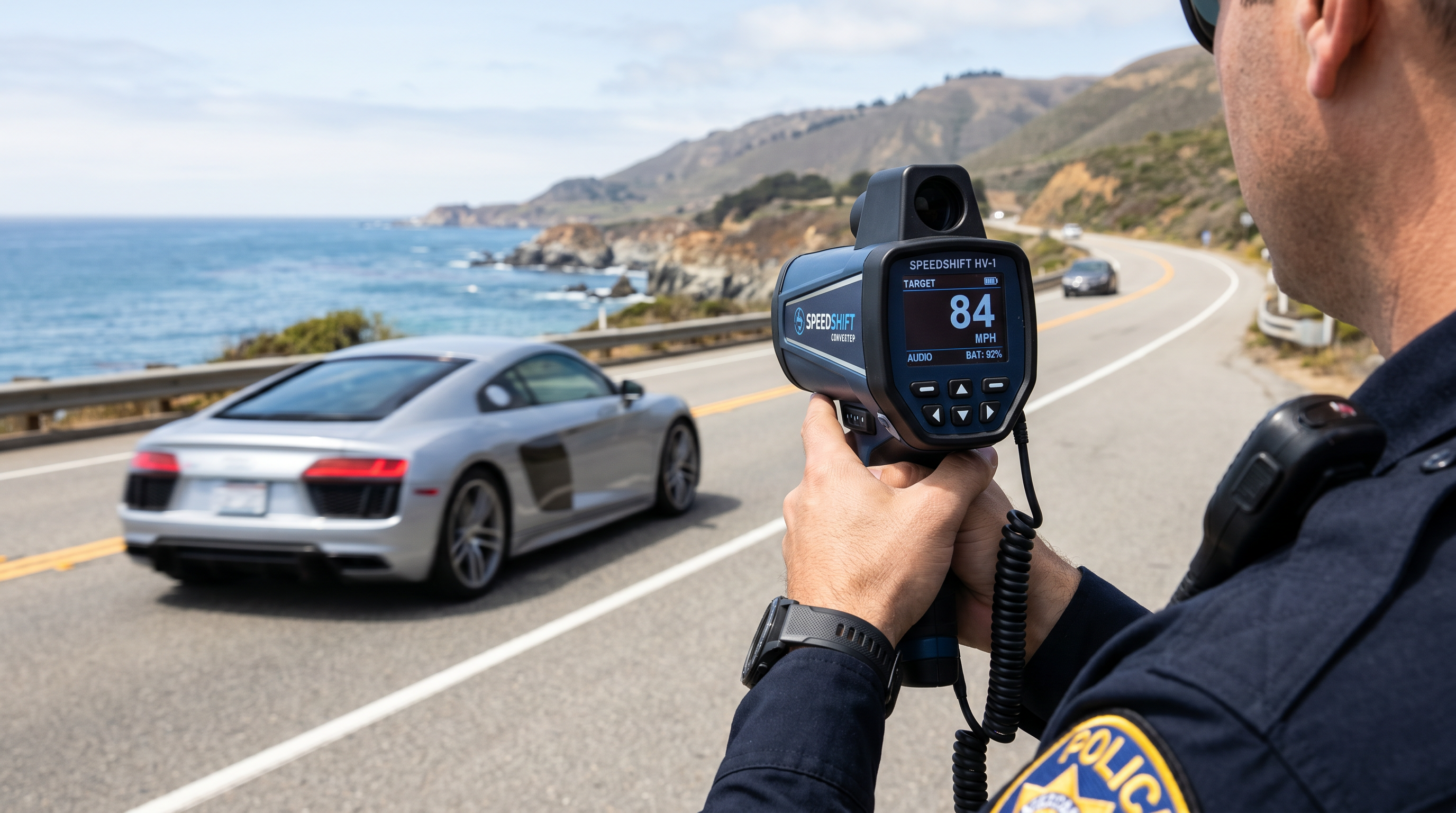
Picture this: You're cruising down the highway at what feels like a leisurely pace—say, 75 MPH (120.7 KPH / 33.5 m/s)—when suddenly, blue lights flash in your rearview. The officer emerges with a handheld device that looks like a sci-fi prop, points it your way, and bam: instant ticket. But how does that little box know your speed with such eerie precision? Welcome to the fascinating world of police radar science, where the Doppler effect speed detection meets cutting-edge tech. In this deep dive, we'll unpack how speed guns work, pitting radar against lidar, debunking myths, and exploring everything from aircraft speed enforcement to radar detector legality. Buckle up—it's time for some geeky physics with real-world bite.
The Doppler Effect: The Heartbeat of Speed Detection
Ever heard a siren pitch drop as an ambulance races past? That's the Doppler effect in action—a wave phenomenon discovered by Christian Doppler in 1842. When a wave source (like sound or light) moves toward you, its frequency compresses, raising the pitch; away, it stretches, lowering it. Speed guns hijack this for police radar science.
Radar guns emit microwave pulses—radio waves around 24-36 GHz—and measure the frequency shift of echoes bouncing off your car. If you're barreling toward the gun at 100 MPH (160.9 KPH / 44.7 m/s), the returning waves arrive squished, with more cycles per second. The device crunches this shift using the formula:
Δf = 2 × (v / c) × f₀
Here, Δf is the frequency shift, v your speed, c the speed of light (3×10⁸ m/s), and f₀ the transmitted frequency. No calculus required: modern guns compute speed in milliseconds, delivering instant speed conversion from Doppler data to MPH, KPH, or m/s for crystal-clear speed context.
Radar Physics Unpacked: Microwave Pulses in Motion
Traditional radar guns, like the handheld Kustom Signals or Decatur models, fire short microwave bursts. The antenna doubles as transmitter and receiver. Echoes return shifted only from moving targets—stationary objects don't budge the frequency. Officers aim at your license plate or headlight for the strongest return, filtering out clutter via signal processing. Range? Up to 1 mile in ideal conditions, though practical use hovers at 1,000-2,000 feet.
Lidar vs Radar: Waves Meet Light in the Ultimate Showdown
Enter lidar vs radar: the battle of radio waves versus laser pulses. Radar blankets a wide beam (10-20 degrees), potentially clocking multiple cars. Lidar? It's laser radar—pulsing infrared light (904 nm wavelength) in ultra-narrow beams (3-6 milliradians, about pencil-thin). Devices like the Laser Technology TruSpeed fire 100-500 pulses per second, timing the round-trip flight time.
Lidar's Time-of-Flight Magic
No Doppler here; lidar measures distance via light speed. Pulse out, echo back: time × c/2 = distance. Multiple pulses track position changes over microseconds, yielding speed. At 60 MPH (96.6 KPH / 26.8 m/s), a lidar gun calculates velocity from tiny displacements. Accuracy? ±1 MPH within 2,000 feet, narrower beam means pinpoint targeting—your taillight, not the truck beside you.
Radar pros: longer range, works in rain/fog better. Cons: beam spread invites errors. Lidar flips it—precise, stealthy (no telltale beep), but weather-sensitive and shorter range (up to 3,000 feet).
Frequency Bands: From K to Ka and Why Stealth Matters
Radar isn't one-size-fits-all. Key bands:
- X-band (10.5 GHz): Old-school, rare now—easy to detect, bleeds through walls.
- K-band (24.150 GHz): Common handheld, broader beam.
- Ka-band (33.4-36.0 GHz): King of modern enforcement. Narrower beam, higher frequency = smaller antenna, harder to detect from afar. Instant-on modes pulse sporadically, foiling detectors.
Ka's tightness (1-2 degree beam) boosts accuracy to ±1 MPH at 1,500 feet, but demands skilled aiming.
Accuracy, Range, and Real-World Performance
Certified guns boast ±1 MPH ±1 digit accuracy up to 200 MPH (322 KPH / 89.4 m/s). NIST calibration ensures reliability; courts rarely challenge valid readings. Range varies: radar to 1 mile (line-of-sight), lidar 1/4 mile. Cosmetics? Bugs or alignment can skew, but pros train rigorously.
Radar Detectors: Superheterodyne Saviors or Relics?
Detectors like Escort or Uniden scan for radar emissions using superheterodyne receivers—mixing incoming signals with a local oscillator to produce audible alerts. They shine on constant-on K-band but struggle with Ka's instant-on and lidar's silence. GPS-enabled models (RDD-aware) warn of known gun hotspots.
Utility today? Mixed. In a Ka/lidar world, they're early-warning systems, buying seconds to brake from 80 MPH (128.7 KPH / 35.8 m/s).
Busting Speed Gun Myths: No Magic Bullets
Myth 1: Reflective paint blinds radar. Reality: Microwaves ignore paint; they penetrate. Myth 2: License plate covers scramble lidar. Nope—most are illegal, and lasers hit elsewhere. Myth 3: CB radios jam guns. Federally banned, ineffective anyway. Spoiler: Physics wins; drive the limit.
Aircraft Speed Enforcement: VASCAR from the Skies
Planes circle at 1,000 feet, marking start/stop lines on highways. Pilots time your travel—no radar needed. VASCAR (Visual Average Speed Computer And Recorder) computes speed: distance/time. At 100 MPH (160.9 KPH / 44.7 m/s) over a mile, you're nabbed. Ground units verify. Legal across most states.
Radar Detector Legality: US and Beyond
Radar detector legality: Legal in most US states for cars (not trucks over 10K lbs, or anywhere in VA/DC). Banned for motorcyclists in 7 states. Europe? Illegal in France, Spain, Brazil; OK in UK/Germany with limits. Always check local laws—fines sting worse than tickets.
Wrapping Up: Physics, Prudence, and Your Next Drive
From Doppler's waves to lidar's lasers, speed guns embody elegant physics powering everyday enforcement. Next time you punch instant speed conversion on your app for speed context, remember: tech evolves, but the laws of nature—and the highway—don't bend. Drive smart, stay curious, and let the geeks geek out.