The Physics of Downhill Skiing: How Fast Can You Go?
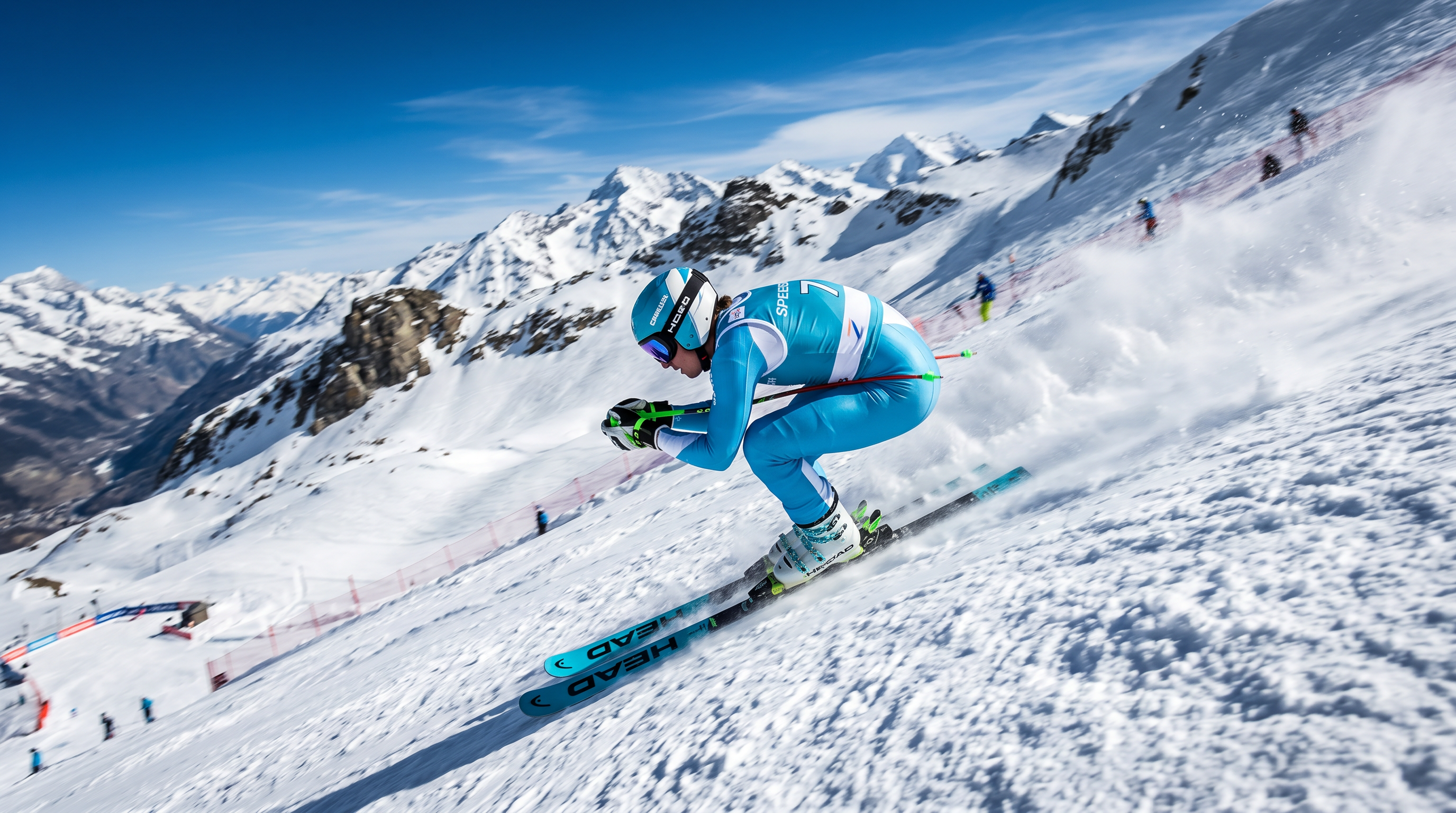
Picture this: you're crouched in a perfect aerodynamic tuck, edges biting flawless corduroy snow, as the world blurs into a white streak. Gravity pulls you faster, wind howls past your helmet, and suddenly—whoosh—your speedometer flashes 80 mph. That's the raw thrill of downhill skiing physics at work. But how fast can you go? From gravity's relentless shove to the whisper of air resistance, we'll dive into the science powering the steepest runs, shatter world records with instant speed conversions, and equip you with tools to measure your own velocity. Whether you're a powder hound, a boarder chasing lines, or a physics student geeking out over terminal velocity, this is your real-time reference for winter sports speed conversion.
The Physics of Speed on Snow: Gravity, Friction, and Drag
At its core, downhill skiing physics boils down to a high-stakes tug-of-war between accelerating forces and those trying to slow you down. Gravity is the undisputed king here—the steeper the slope, the greater the component of your weight pulling you parallel to the snow. On a 45-degree pitch, it's like having an invisible engine slamming the throttle wide open.
But snow isn't frictionless magic. Enter two key resistors: ski-base friction and internal snow friction. Ski-base friction depends on wax quality and temperature; a hot wax tuned for -5°C glides smoother than sandpaper. Internal snow friction arises as crystals deform under your skis—think of it as the snow "giving" just enough to let you slide but gripping back. Minimize this with speed-specific waxes, and you shave seconds off your run.
Then there's air resistance, or drag, the speed thief that scales quadratically with velocity. At 20 mph, it's a gentle breeze; at 100 mph, it's a gale-force wall. This is where aerodynamics in skiing reigns supreme. The iconic tuck position—knees bent, elbows in, fists stacked by your chin—slashes your drag coefficient from 1.0 (standing upright) to around 0.3, like transforming from a barn door to a bullet. Physics students, note the equation: drag force = ½ × ρ × v² × Cd × A, where ρ is air density, v is speed, Cd is drag coefficient, and A is frontal area. Tuck tight, and you rocket toward terminal velocity.
World Record Downhill Speeds: Breaking Barriers with Instant Speed Conversion
No discussion of downhill skiing physics is complete without the speed demons who push limits. In World Cup racing, Frenchman Johan Clarey etched his name in history during the 2023 Wengen downhill, clocking a blistering 100.6 mph (161.9 kph) through the radar trap. That's expert-level velocity on a technical course—imagine threading needles at highway speeds.
But for pure, unadulterated speed, look to speed skiing specialists on groomed, near-vertical straights. Simon Billy of France holds the men's record at 158.03 mph (254.36 kph), set on the Vars piste in 2017. These feats demand perfect conditions, but they showcase skiing speed world records as pinnacles of human engineering and physics mastery. Our Instant Speed Conversion makes it effortless: 100 mph = 160.93 kph; 158 mph ≈ 254 kph. Bookmark this as your fastest on the web tool for ski speed conversion mph to kph.
"At those speeds, every millisecond of tuck shaves meters off the drag battle."—The unspoken mantra of record chasers.
Environmental Factors: Slope, Snow, and Thin Air
Slope Angle and Snow Temperature
Steepness dictates acceleration: a 30-degree slope gives about 0.5g of forward pull; crank it to 50 degrees, and you're nearing 0.8g. Records fall on pistes like Vars or Les Arcs, engineered for 45-55 degree straights.
Snow temperature tweaks friction—colder (-10°C) yields icier, faster surfaces; warmer snow increases viscosity, slowing you. Pros prepare waxes with Mental Math Trick: for every 1°C rise, adjust glide wax hardness up 2-3 points.
Altitude and Air Density
Higher altitude means thinner air (lower ρ), slashing drag by 10-20% above 2,000m. Chamonix or Zermatt records benefit here—less atmospheric pushback lets gravity dominate longer.
Equipment Engineering: Built for Blistering Velocity
Speed skis are physics labs on boots. Longer skis (200+ cm) bridge bumps for stability, stiffer flex resists chatter at 100 mph, and sintered bases hold fluorocarbon waxes that repel water like mercury. But speed demands sacrifice: narrower waists trade carve control for glide. Helmets with teardrop shapes and skin-tight suits (zero air pockets) are Cd minimizers. Recreational fast skiing safety starts with gear rated for your pace—don't chase records on rental all-mountains.
- Length: Longer = smoother high-speed lines.
- Stiffness: Rock-hard cores damp vibrations.
- Wax: HF (high-fluoro) for sub-zero speed demons.
Speed Context: Your Instant Conversion Table
Demystify your runs with this winter sports speed conversion table. Use it as a real-time reference—Mental Math Trick: MPH × 1.6 ≈ KPH; divide KPH by 3.6 for m/s.
| Speed Category | MPH | KPH | m/s |
|---|---|---|---|
| Beginner Cruise | 10-15 | 16-24 | 4.5-6.7 |
| Intermediate Flow | 20-30 | 32-48 | 9-13.4 |
| Expert Carve | 40-60 | 64-97 | 17.9-26.8 |
| World Cup Trap | 80-100 | 129-161 | 35.6-44.7 |
| Speed Record (Billy) | 158 | 254 | 70.7 |
Fast Skiing Safety and Recreational Reality
Records dazzle, but fast skiing safety is paramount. At 60+ mph, reaction time drops to 0.5 seconds— a bump can spell disaster. Wear full armor, avalanche beacons, and use GPS watches (like Garmin) for real-time speed tracking with instant MPH to KPH readout. Recreational skiers: estimate via slope length and time (distance/time = speed), or apps like Slopes for radar-free mph/kph logging.
Push boundaries smartly—progress from green runs to black diamonds, mastering tuck progressively. Physics teaches limits; respect them to ski another day.
Pushing the Edge: Your Next Run Awaits
Downhill skiing physics isn't just equations—it's the pulse-pounding alchemy of force, form, and fearlessness. Armed with world records, environmental insights, gear know-how, and our Instant Speed Conversion table, you're primed to chase your personal best. Next lift: drop in, tuck low, and feel gravity win. How fast will you go?