Fastest Animals on Earth: Cheetah Speed vs. Falcons, Sailfish & Humans – Ultimate MPH, KPH Comparison
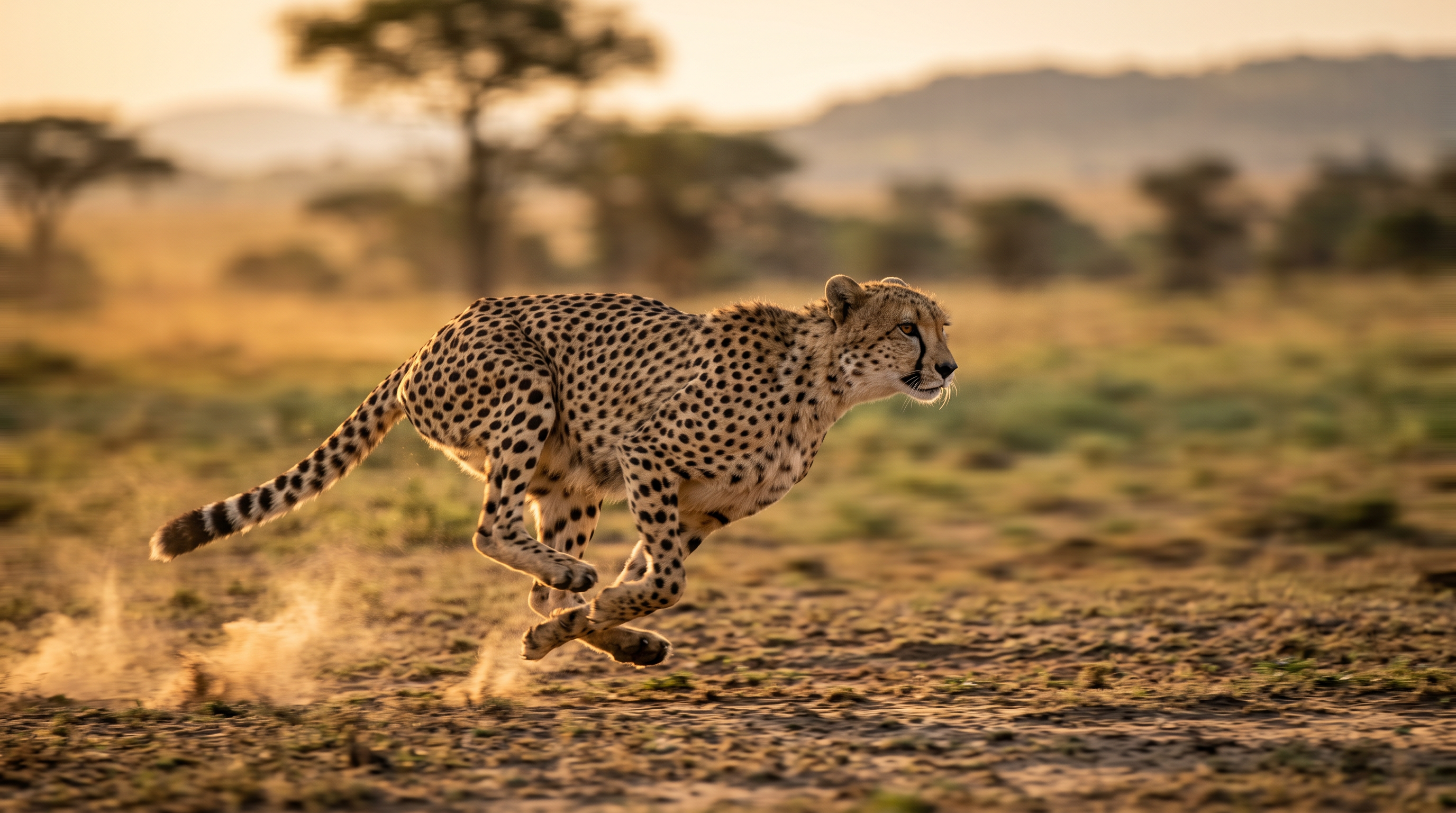
Imagine a blur of gold and black tearing across the African savanna at over 60 miles per hour—that's the cheetah, the undisputed fastest land animal, accelerating from 0 to 60 mph in just three seconds. Faster than a sports car off the line. But what if we pit that cheetah speed against the screaming dive of a peregrine falcon or the torpedo-like burst of a sailfish? In this ultimate animal speed comparison, we'll race through the animal kingdom's speed demons, breaking down their top velocities in MPH, KPH, and meters per second. Whether you're a student cramming for biology, an animal lover in awe of nature's engineering, or just curious about human speed vs animals, buckle up for a thrilling ride.
The Sprint Kings: Fastest Land Animals
On terra firma, speed is all about explosive power and endurance. The cheetah reigns supreme with bursts up to 75 MPH (121 KPH), but it can only sustain that blistering pace for about 20-30 seconds before overheating. How? Its biology of speed is a marvel: a flexible spine that acts like a spring, semi-retractable claws for grip like sneakers on turf, and a lightweight frame with oversized nostrils and lungs for oxygen gulps.
Not far behind is the pronghorn antelope, clocking 55 MPH (88 KPH) not just in sprints but over miles—thanks to an oversized heart (150% larger than expected) and lungs that swap air twice as efficiently. Greyhounds, the greyhound speed legends of the racetrack, hit 46 MPH (74 KPH) using a double-suspension gallop where all four feet leave the ground twice per stride. Lions top out at 50 MPH (80 KPH) in short chases, while quarter horses burst to 55 MPH (88 KPH).
Fun Fact: Cheetah vs. Sports Car
A cheetah's how fast is a cheetah acceleration beats a Lamborghini—0-60 in 3 seconds flat. Yet, unlike cars, it pays with exhaustion, collapsing after the hunt.
Skyward Streaks: Fastest Birds in Flight
Birds don't just fly—they plummet. The peregrine falcon claims the crown as the fastest animals overall at 240 MPH (386 KPH) in a hunting stoop, folding wings into a spearhead shape to slice through air at Mach 0.3. Speeds are measured via GPS trackers and high-speed cameras during dives.
The golden eagle dives at up to 200 MPH (322 KPH), using powerful talons and aerodynamic feathers. For level flight, the spine-tailed swift zips at 105 MPH (169 KPH), its body a streamlined bullet.
Surprising Stat
A falcon's dive generates forces up to 14 Gs—astronaut territory—yet its skeleton absorbs it without shattering.
Ocean Rockets: Fastest Sea Creatures
Underwater, drag is the enemy, but sailfish conquer it at 68 MPH (109 KPH), their sail-like dorsal fin folding back and bill slicing water. Measured with sonar and boat chases, black marlin push 80 MPH (129 KPH) in bursts, thrashing tails like propellers.
These speeds rely on fusiform bodies, powerful lateral muscles, and gills pumping oxygen at turbo rates.
How Do Humans Measure Up?
In the grand human speed vs animals showdown, we're no slouches—but relative to beasts, we're joggers. Usain Bolt peaked at 27.8 MPH (44.7 KPH) during his 100m record, thanks to fast-twitch fibers and biomechanics honed by evolution. An average human sprints at 12-15 MPH (19-24 KPH). We excel in endurance, though—marathoners outpace migrating pronghorns over hours.
Picture Bolt eyeing a cheetah: it's like a Ferrari vs. a bicycle—impressive, but worlds apart.
Ultimate Animal Speed Comparison Table
Here's your mph to kph animal speeds showdown. Use this animal speed converter reference for instant biology of speed insights.
| Animal | Category | Max Speed MPH | Max Speed KPH | Max Speed m/s |
|---|---|---|---|---|
| Cheetah | Land | 75 | 121 | 33.5 |
| Pronghorn Antelope | Land | 55 | 88 | 24.6 |
| Greyhound | Land | 46 | 74 | 20.6 |
| Lion | Land | 50 | 80 | 22.4 |
| Peregrine Falcon (dive) | Air | 240 | 386 | 107.3 |
| Golden Eagle (dive) | Air | 200 | 322 | 89.4 |
| Sailfish | Water | 68 | 109 | 30.4 |
| Black Marlin | Water | 80 | 129 | 35.8 |
| Usain Bolt (peak) | Human | 27.8 | 44.7 | 12.4 |
| Average Human Sprint | Human | 15 | 24 | 6.7 |
Note: Speeds vary by measurement method (GPS, radar, estimates) and conditions. Land/air/water mediums affect comparability.
The Biology of Speed: Engineering Masterpieces
- Cheetah: Flexible spine coils like a pogo stick; claws dig in; tail steers mid-air.
- Pronghorn: Massive nasal cavities preheat air; blood doping via high hemoglobin.
- Greyhound: Double suspension gallop minimizes ground time; 200+ bones vs. human 206 for flex.
- Falcon: Nictitating membrane protects eyes; hollow bones reduce weight.
- Sailfish: Heat-generating muscles near eyes for precise strikes.
Evolution sculpted these traits over millennia, turning predators into living missiles.
Fun Facts & Surprising Comparisons
- A cheetah covers 22 feet in one stride—length of a car.
- Peregrine falcon's dive is 3x a Formula 1 car's top speed.
- Sailfish swims 10x body lengths per second—olympic swimmers dream of that.
- Bolt's speed equals a greyhound pup's casual trot.
- Pronghorns outrun cars on highways for minutes.
Convert Animal Speeds Yourself: MPH, KPH, m/s Tool
Craving your own animal speed converter? Head to getspeedconvert.com for instant swaps. Formulas if you're math-inclined:
- MPH to KPH: MPH × 1.60934
- KPH to MPH: KPH ÷ 1.60934
- MPH to m/s: MPH × 0.44704
Example: Cheetah's 75 MPH? 75 × 1.60934 = 120.7 KPH. Plug in falcon dives or Bolt sprints—watch nature's numbers dance.
From savanna dashes to ocean dashes, these fastest animals remind us: speed isn't just velocity; it's survival's poetry. What's your favorite speedster?