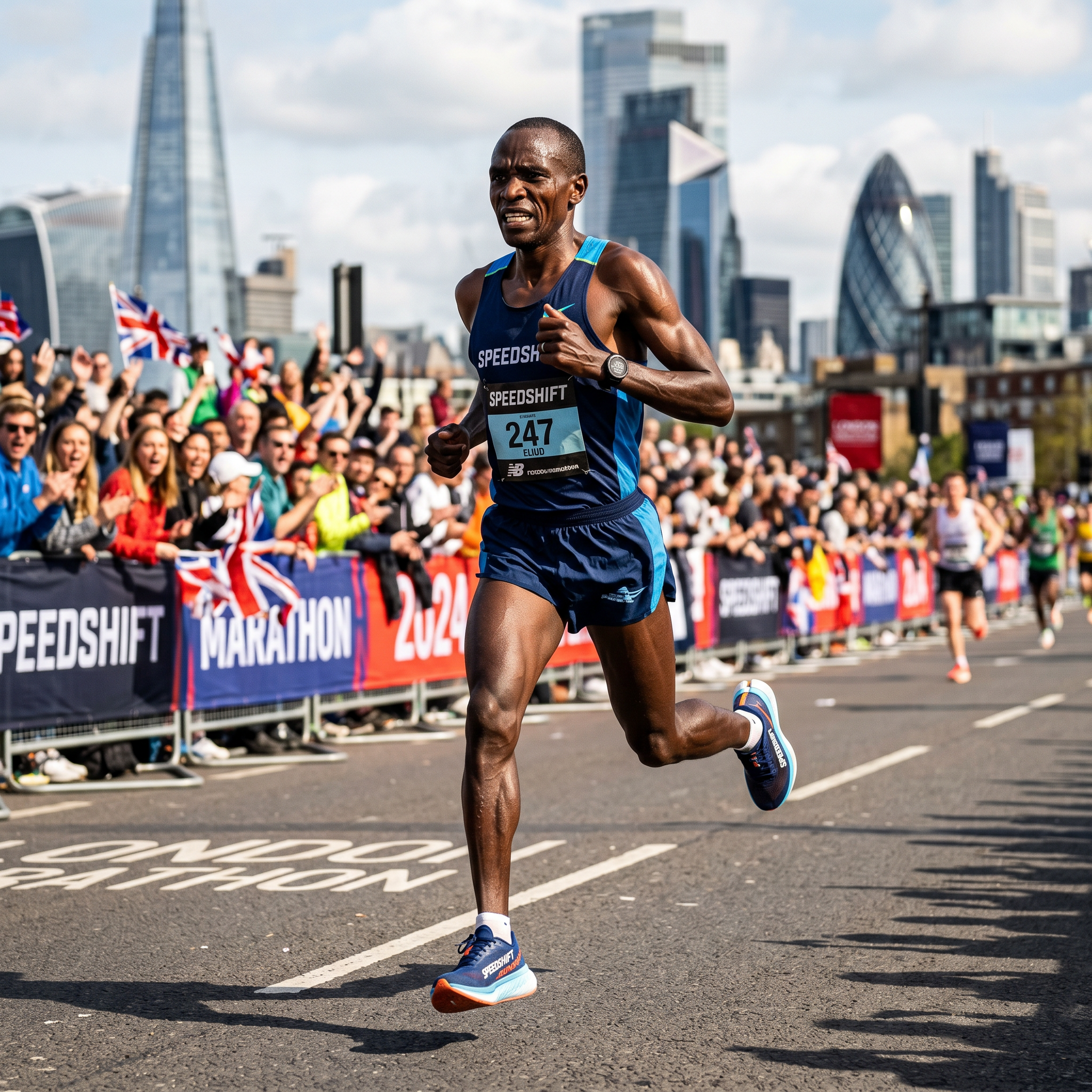
Sub-2 Hour Marathon Breakdown: Kipchoge's Insane Speed (13 MPH), Pace Math & Record Physics
Imagine this: a human body slicing through the air at the speed of a casual cyclist, mile after relentless mile, for a full marathon distance. That's the essence of the sub 2 hour marathon dream—a feat that pushes the boundaries of human physiology, engineering, and sheer willpower. For runners, triathletes, and endurance sports fans, Eliud Kipchoge's near-mythical performances embody the pinnacle of what's possible. But how fast is 13 MPH over 26.2 miles, really? Let's break down the marathon world record, the physics, and the math that make it all hang together.
The Evolution of the Marathon World Record
The marathon has been a showcase of human limits since ancient Greece, but modern records tell a story of dramatic progression. It started with Johnny Hayes clocking 2:55:18 at the 1908 London Olympics—roughly 9 MPH (14.5 KPH), or a pace of 6:40 per mile (4:09 per km). Fast forward a century, and elite times have plummeted.
By the 1960s, Jim Hines hit 2:18:58. The 1980s saw the 2:10 barrier fall. Derek Clayton's 2:08:34 in 1969 stood for years until Belayneh Dinsamo's 2:06:50 in 1988. The 21st century accelerated: Patrick Makau's 2:03:38 in 2011, then Dennis Kimetto's 2:02:57 in 2014. Eliud Kipchoge seized the marathon world record with 2:01:39 in Berlin 2018, refining it to 2:01:09 in 2022. Each drop reflects better training, nutrition, and tech—but the curve is steepening, hinting at physical limits.
Eliud Kipchoge and the Breaking2 Project
Kenyan legend Eliud Kipchoge redefined possibility with Nike's Breaking2 project. On May 6, 2017, he ran 2:00:25 in Monza, Italy—close, but not sub-2. Then, on October 12, 2019, in the INEOS 1:59 Challenge, Kipchoge shattered the barrier: 1:59:40. That's Eliud Kipchoge speed at its peak—20.72 km/h (12.87 MPH), or 4:35 per mile (2:51 per km).
Why isn't this the official marathon world record? World Athletics rules cite non-standard conditions: rotating pacemaker shields, a lead car blocking wind, and a track-loop course. His Berlin 2:01:09 remains official, run on roads with conventional pacing. The exhibition proved sub-2 is humanly possible; the record proves it's competitively viable.
The Brutal Math of a Sub-2 Hour Marathon
Core Speed Metrics
To hit sub-2 (under 7,200 seconds for 42.195 km), you need sustained velocity of 21.02 km/h (13.06 MPH / 5.84 m/s). Pace-wise: 2:50 per km (4:34 per mile). On a standard 400m track, that's 105 laps at exactly 68 seconds each—no room for fade.
- Per mile: 4:34 min/mile → Hold this 26 times straight.
- Per km: 2:50 min/km → 42 reps without cracking.
- Halfway (21.1 km): Under 60 minutes flat.
The marathon physics here is unforgiving. Air resistance scales quadratically with speed, demanding 85%+ of energy just to overcome drag at these velocities. Heart rates hover at 85-90% max for hours, lactate thresholds pushed to extremes.
Speed Context: How Insane Is 13 MPH for 26.2 Miles?
Here's your Instant Speed Conversion: Kipchoge's 13.06 MPH matches a pro cyclist coasting casually or a treadmill cranked to max (many top out at 12-15 MPH). Yet amateurs cruise marathons at 6-8 MPH (10-13 KPH, 9-12 min/mile paces). Triathletes off the bike might hit 7-9 MPH running.
Speed Context: It's like driving a car at 13 MPH in first gear—deceptively slow until you factor 2+ hours nonstop. Compare to a 5K: elites run 400m in ~50s; Kipchoge did 68s x105. The endurance multiplier is staggering.
The Women's Frontier: Tigist Assefa's Record Leap
Women are closing gaps fast. Tigist Assefa's 2:11:53 at Chicago 2023—Tigist Assefa world record—equates to 19.02 km/h (11.82 MPH), 4:59 per mile (3:05 per km). From Brigid Kosgei's prior 2:14:04, that's a 2:11 drop in one race. Women's progression mirrors men's: steady until super shoes turbocharged it. Sub-2:10? Inevitable soon.
The Tech Revolution Fueling Records
Carbon-plated "super shoes" like Nike Alphafly revolutionized marathon physics. They boost metabolic efficiency by 4-5% via spring-like energy return, reducing oxygen cost. Paired with precise fueling (gels every 5K), they turn theoretical paces into reality. Pre-shoe era records stagnated; post-2017, eight men have dipped under 2:02.
Why Berlin, Chicago, and London Host Records
Fast courses are flat, straight-ish, with tailwinds and cool temps. Berlin's pancake-flat loop favors even pacing. Chicago's grid minimizes turns. London adds slight undulation but iconic boosts. These venues enable precise running pace converter math—no hills stealing seconds.
Elite Strategy: The Art of Negative Splitting
Kipchoge masters negative splits: first half conservative (e.g., 1:01 for half in sub-2 attempt), second half surging. This conserves glycogen, delays fatigue. Physics-wise, it minimizes cumulative drag penalties from early overexertion. Amateurs: try it in training for PRs.
Your Pace: Harness the Math Today
The sub 2 hour marathon awe inspires, but apply it personally. Use SpeedShift's running pace converter for Instant Speed Conversion—input your goal 5K pace, get marathon equivalents in MPH, KPH, min/mile, min/km. Train smarter: aim for Kipchoge-like consistency at your level. The physics work for everyone chasing that next breakthrough.
Sub-2 isn't just elite lore—it's a blueprint for human potential. Lace up, calculate, and run toward your limits.