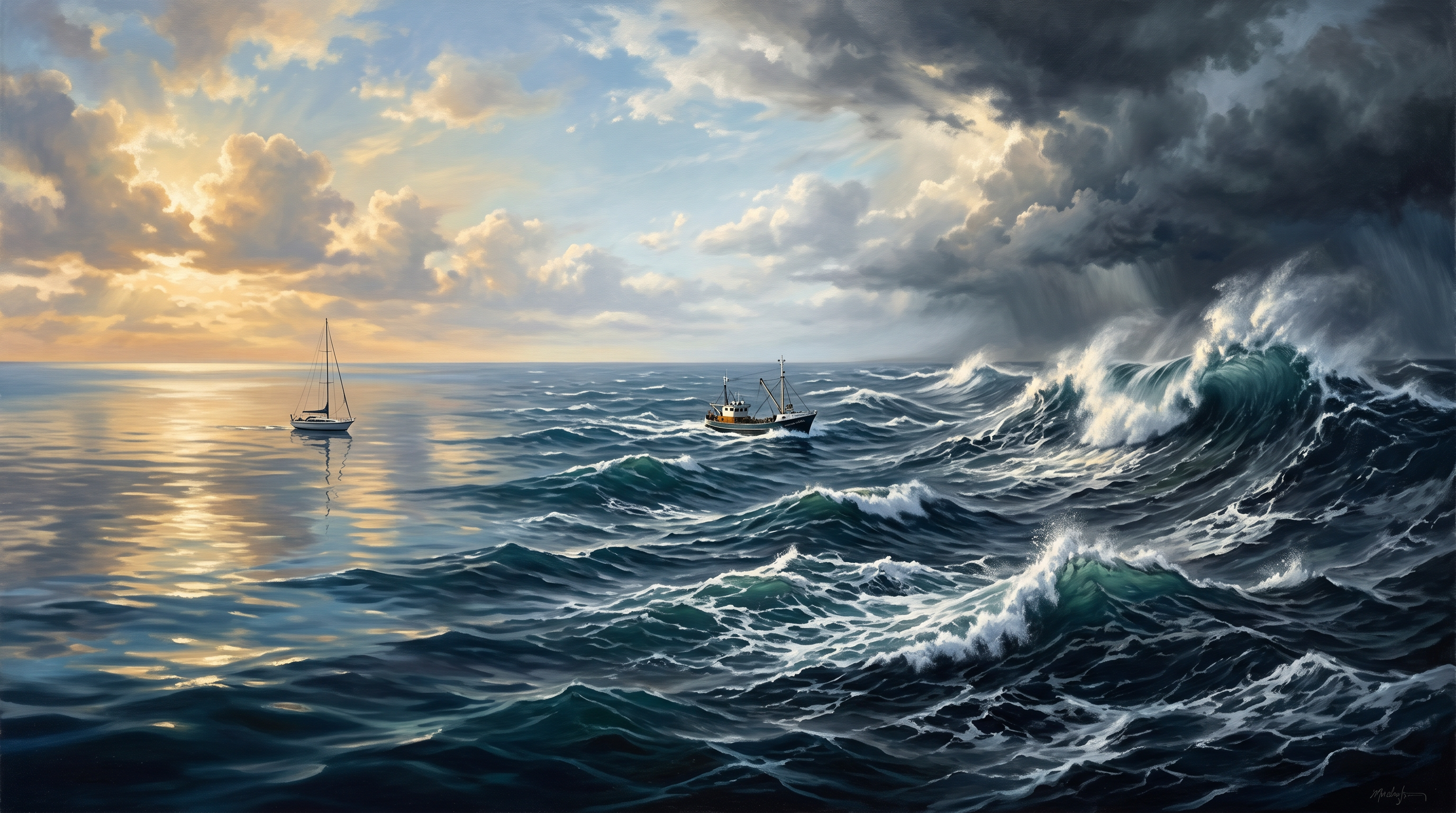
Beaufort Scale Explained: Wind Speeds in Knots, MPH & More – Sea States, Safety for Sailors
Picture this: dawn breaks over a glassy sea, your sails limp in the utter stillness of a Beaufort Force 0. By midday, whitecaps fleck the waves, and the boat heels under a steady blow—welcome to Force 5, where sailing weather demands respect. For sailors, boaters, weather enthusiasts, and beachgoers alike, the Beaufort scale isn't just a chart; it's a lifeline, translating abstract wind speed units into vivid, real-world cues about sea states and safety. Whether you're plotting a coastal hop or gauging if the beach is swimmable, mastering this scale turns forecasts into foresight.
In an era of apps and anemometers, why bother? Because when electronics fail or you're eyeballing conditions offshore, the Beaufort scale empowers you to estimate wind speed visually—no gadgets required. Developed for mariners, it bridges knots to MPH, km/h, and m/s, revealing what each Beaufort force truly means for maritime safety. Let's dive in, from mirror-calm to hurricane chaos.
What is the Beaufort Scale?
The Beaufort scale, devised in 1805 by Irish hydrographer Rear Admiral Sir Francis Beaufort, was originally a 13-point system (0 to 12) for the British Royal Navy. Sailors logged wind effects on sails and rigging rather than speeds, standardizing reports without instruments. Beaufort defined each force by observable phenomena on land and sea, making it timeless for wind conversion across units.
Revised in 1926 to include precise wind speed ranges (primarily in knots for maritime use), it's now the World Meteorological Organization's global standard. From Beaufort Force 0 (calm) to Force 12 (hurricane), it paints wind not as numbers, but as motion: rippling water, bending trees, tumbling seas. Perfect for passage planning, where a forecast of Force 6 might mean reefing early or diverting.
The Complete Beaufort Scale: Wind Speeds, Sea States, and Land Effects
At a glance, here's the full Beaufort scale with wind speed units side-by-side for easy knots to MPH and other wind conversion. Speeds are lower-to-upper limits (or minimum for Force 12). Use this table for quick reference during sailing weather checks.
| Beaufort Force | Knots | MPH | km/h | m/s | On Land | Sea State |
|---|---|---|---|---|---|---|
| 0 | 0–1 | 0–1 | 0–1 | 0–0.2 | Smoke rises vertically | Sea like a mirror |
| 1 | 1–3 | 1–3 | 1–5 | 0.3–1.5 | Wind direction shown by smoke drift | Ripples like scales, no foam crests |
| 2 | 4–6 | 4–7 | 6–11 | 1.6–3.3 | Wind felt on face; leaves rustle | Small wavelets; glassy crests |
| 3 | 7–10 | 8–12 | 12–19 | 3.4–5.4 | Leaves and small twigs in motion | Large wavelets; crests not breaking |
| 4 | 11–16 | 13–18 | 20–28 | 5.5–7.9 | Small branches sway; dust raised | Small waves (1 m); some whitecaps |
| 5 | 17–21 | 19–24 | 29–38 | 8.0–10.7 | Small trees sway; wavelets on lakes | Moderate waves (2 m); many whitecaps |
| 6 | 22–27 | 25–31 | 39–49 | 10.8–13.8 | Large branches move; whistling heard | Large waves (4 m); foam streaks |
| 7 | 28–33 | 32–38 | 50–61 | 13.9–17.1 | Whole trees bend; walking difficult | Sea heaps up; spray everywhere |
| 8 | 34–40 | 39–46 | 62–74 | 17.2–20.7 | Twigs break off; progress impeded | High waves (6 m); tumbling sea |
| 9 | 41–47 | 47–54 | 75–88 | 20.8–24.4 | Branches break; slight damage | Very high waves (9 m); heavy spray |
| 10 | 48–55 | 55–63 | 89–102 | 24.5–28.4 | Trees uprooted; considerable damage | Exceptionally high waves (14 m) |
| 11 | 56–63 | 64–72 | 103–117 | 28.5–32.6 | Widespread damage; rare inland | Phenomenal waves (16 m+) |
| 12 | 64+ | 73+ | 118+ | 32.7+ | Devastation occurs | Air filled with foam/spray; sea white |
Note: Sea state wave heights are average; actuals vary with fetch and duration. Inland waters mimic open sea less dramatically.
Visualizing the Beaufort Scale: Light Winds (Forces 0–3)
Forces 0–1: The Stillness Before the Breeze
At Beaufort Force 0, the world holds its breath—perfect for motoring or a contemplative drift, but sails hang lifeless. Force 1 introduces the first kisses of air, ideal for dinghy sailing or spotting fish boils on calm bays. Beachgoers revel in mirror-flat water for paddleboarding, but watch for building ripples signaling change.
Forces 2–3: Gentle to Moderate Breeze
Leaves dance and wavelets sparkle at Force 2, filling light sails sweetly. By Force 3, sea states show larger wavelets, perfect for coastal cruisers making 5–6 knots under genoa alone. On shore, it's a brisk walk with rustling trees—kite flyers' delight, but swimmers note mild chop.
Moderate to Strong Winds: Forces 4–6
This is where the Beaufort scale shifts from playful to purposeful. Force 4 (Moderate Breeze) brings the first whitecaps, waves about 1 meter high—standard fair for day sails, but reef the main if short-handed. Trees sway noticeably onshore, dust devils whirl.
Force 5 (Fresh Breeze) amps it up: moderate 2-meter waves with frequent foam, boat speed surges under balanced canvas. Beachgoers spy surfers riding white horses, but rips strengthen. Force 6 (Strong Breeze) demands caution—4-meter waves with foam streaks, large branches creak, and sailors single-reef while eyeing the horizon for darker skies.
Gales and Beyond: Forces 7–12
Forces 7–8: Near Gale to Gale
Force 7 (Near Gale) heaves seas into moderate tumult, spray stinging faces—time to bare poles or heave-to for offshore boats. Walking into it onshore feels like leaning into a pushy crowd. Force 8 (Gale) builds 6-meter waves, tumbling crests reducing visibility; structural twigs snap, and small craft warnings fly.
Forces 9–12: Storm to Hurricane Force
Force 9 (Strong Gale) unleashes 9-meter monsters with heavy spray veils. Force 10 (Storm) uproots trees, waves towering 14 meters with overhanging crests. Beyond, Force 11 and 12 turn sea to froth, air thick with spindrift—hurricane territory where survival trumps sailing. Beachgoers stay ashore; devastation inland mirrors offshore peril.
How to Visually Estimate Wind Speed Without Instruments
No anemometer? No problem. The Beaufort scale shines here, using nature's cues for wind speed estimation.
- On Land: Start with smoke (Force 0–1), progress to leaf rustle (2–3), branch sway (4–5), tree bending/walking resistance (6–7), and breakage/uprooting (8+).
- At Sea: Count wave patterns—glassy ripples (1–2), whitecaps sparse (4), frequent (5), foam streaks (6), spray (7+). Wave period (seconds between crests) hints strength: short = local wind, long = building swell.
- Pro Tip: Flags tell tales—limp (0–1), extended (3–4), whipping (6+). For precision, observe from a stable vantage; cross-check land and sea.
Practice on familiar waters: a beach with steady 15 knots (Force 4–5) shows scattered whitecaps and swaying palms—soon, you'll read Beaufort force like a book.
How Sailors and Mariners Use the Beaufort Scale Daily
In navigation and passage planning, the Beaufort scale is gold. GRIB files and synoptic charts forecast in Bft alongside knots, letting skippers visualize sea states. Plan reefing at Force 5 (first mainsail slab), double-reef or staysail at 6–7. Route around gales (8+), favoring downwind legs where waves surf the hull.
Coastal boaters check for Force 4+ before departing—moderate waves challenge tenders. Weather enthusiasts pore over it for chase planning; beachgoers translate to surf size (Force 4–6 prime). It's the universal language of sailing weather, blending art and science.
Maritime Safety Implications Across Beaufort Forces
Maritime safety hinges on thresholds. Forces 0–3: Bliss for novices, full canvas fly. 4–5: Heel increases—reef proactively, monitor autopilot load. Force 6: Small boats seek harbor; larger vessels reduce sail, prepare storm tactics.
- Force 7–8: Gale warnings—hove-to or run off; lifejackets mandatory, avoid night passages.
- Force 9+: Storm tactics essential (bare poles, drogue); EPIRB ready. Beachgoers: No water entry—rips and dumpers lethal.
Remember: Vessel size matters. A 40-footer laughs at Force 7; a 20-foot daysailer cowers at 5. Always factor experience, crew, and sea room.
Master the Wind: Your Beaufort Compass
The Beaufort scale demystifies chaos, turning ephemeral gusts into predictable patterns. Next time whitecaps crown the bay or trees groan ashore, you'll know: Force 5, reef time. For sailors charting blue horizons, boaters dodging squalls, or beachgoers chasing perfect swells, it's more than measurement—it's mastery. Heed it, and the sea reveals its secrets, one force at a time.