Sailing 101: Nautical Miles, Knots to MPH Conversions & Boat Speed Basics for Beginners
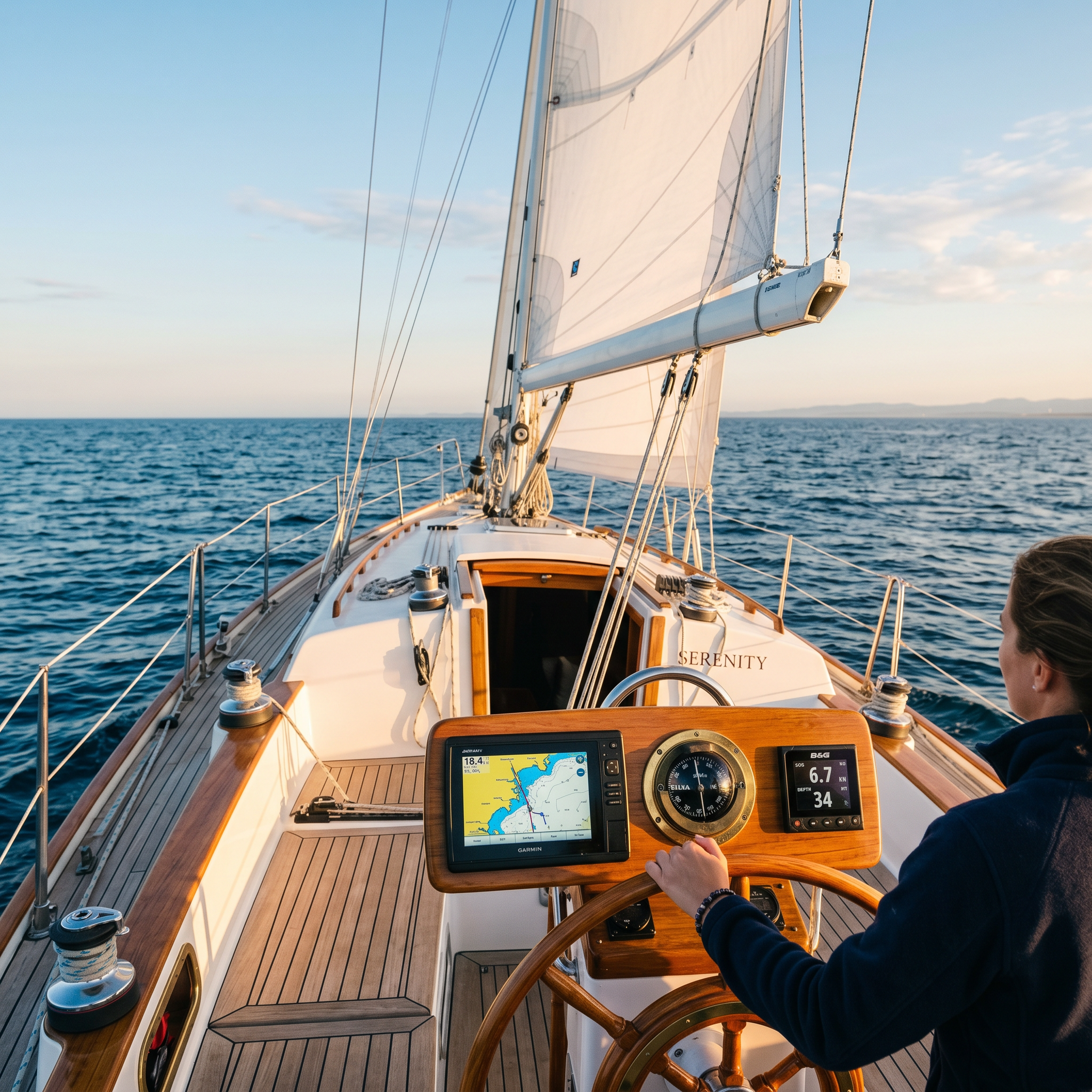
Picture this: You're at the helm of your first sailboat, the wind filling the sails, waves whispering against the hull. The horizon stretches endlessly, but suddenly your GPS chirps—5.2 knots. Knots? What's that? And why does the chart show 10 nautical miles to the next buoy? If you're dipping your toes into sailing basics, these nautical terms can feel like a secret code. Fear not, matey. I'm your friendly sailing instructor, here to demystify nautical miles, knots speed, and boat speed measurement with practical tips and easy conversions. By the end, you'll navigate these waters like a pro.
Whether you're a new sailor prepping for coastal cruises, a boat owner tweaking your speed logs, or just a maritime enthusiast daydreaming of adventures, mastering these units isn't just trivia—it's your ticket to confident seafaring. Let's set sail.
What is a Nautical Mile? Why It's Not Your Everyday Mile
Ever wonder why sailors don't just use regular miles? A nautical mile is the sea's gold standard, defined as exactly one minute of latitude along any meridian. That's about 6,076 feet—or 1.1508 statute miles (the land miles you're used to on your car dashboard).
Why the difference? Land miles (statute miles) are arbitrary, born from old English furlongs for plowing fields. Nautical miles? They're pure navigation genius. Navigators plot courses using latitude and longitude on charts—each minute of latitude equals one nautical mile. It's spherical math made simple for Earth's curved surface.
Practical example: Cruising from San Francisco to Monterey? It's roughly 70 nautical miles, not 70 car miles. Use the wrong one, and you'll miss your harbor by miles—literally.
Nautical Miles to Miles and Kilometers Conversion Table
| Nautical Miles | Statute Miles | Kilometers |
|---|---|---|
| 1 | 1.1508 | 1.852 |
| 5 | 5.754 | 9.260 |
| 10 | 11.508 | 18.520 |
| 20 | 23.017 | 37.040 |
| 50 | 57.542 | 92.600 |
Bookmark this for your next passage plan. Pro tip: Most chartplotters toggle between units—stick to nautical for precision.
Knots Speed Explained: The Heart of Boat Speed Measurement
Speed at sea? It's measured in knots, not miles per hour. One knot equals one nautical mile per hour. Simple, right? A 6-knot breeze might sound leisurely, but on water, that's a brisk 6.9 MPH—perfect for a day sail.
Why knots? The term hails from tying knots on a log line (more on that soon). It's universal: Every navy, yacht club, and freighter speaks knots. Imagine hailing a fishing boat on VHF: "What's your knots speed?" They'll know instantly.
In sailing basics, know your speeds: Displacement hulls top out around 7 knots; planing powerboats hit 30+. Wind? Force 4 is 11-16 knots—reef those sails!
Knots to MPH and KPH Conversion Tables
| Knots | MPH | KPH |
|---|---|---|
| 5 | 5.8 | 9.3 |
| 10 | 11.5 | 18.5 |
| 15 | 17.3 | 27.8 |
| 20 | 23.0 | 37.0 |
| 30 | 34.5 | 55.6 |
| Knots | MPH (knots to mph) | KPH (knots to kph) |
|---|---|---|
| 40 | 46.0 | 74.1 |
| 50 | 57.5 | 92.6 |
Quick math hack: Multiply knots by 1.15 for MPH, 1.85 for KPH. Now you're equipped for any cockpit conversation.
The Cable Nautical Unit: Your Short-Distance Sea Measure
Need to measure a tenth of a nautical mile? Enter the cable nautical, or just "cable"—608 feet, about 1/10 NM. It's like a sea furlong for anchoring or spotting hazards.
Example: Drop anchor in 5 cables of water? That's 0.5 NM deep—perfect for a sandy bay. Cables shine in tides and currents, where precision beats vague guesses.
Still used? Absolutely—in naval ops and yacht racing, calling distances in cables keeps things crisp.
The Chip Log: A Gripping History of Knots Speed Measurement
Flash back to the 1500s. No GPS, just salty sailors heaving a "chip log"—a wooden board shaped like a pie slice, tethered to a knotted line. Toss it astern; it sails steady against the water while the line runs free for 28-30 seconds (a half-minute glass timer).
Count knots passed through your fingers— that's your knots speed. Miss a beat? Wrong speed, wrecked ship. Vivid scene: Mid-Atlantic gale, Captain Bligh (yes, that one) grips the log line, knots whipping by as mutiny brews below. Ingenious, brutal, born of necessity.
By 1600s, it was standard. The line's knots spaced exactly 47 feet 3 inches apart—calibrated for that timed run to equal one nautical mile per hour. No wonder "knots" stuck.
Modern Boat Speed Measurement: GPS, Sonar, and Beyond
Today, your chartplotter's GPS gives speed over ground (SOG)—true progress accounting for currents. Punchy: 7 knots SOG, but water speed (via impeller log) reads 6? You're riding a 1-knot favorable current.
Sonar (actually multi-beam echo sounders or Doppler logs) measures through-water speed without dragging. Paddle-wheel sensors spin with water flow; electromagnetic logs detect voltage from moving seawater. Accurate to 0.1 knots.
Pro setup: Calibrate both. GPS for navigation, log for sail trim. Racing? Log rules—currents fool GPS.
Why Sailors Still Swear by Traditional Nautical Units Today
MPH feels landlocked. Nautical miles and knots? They're alive because seas don't care about borders. International regs demand them; charts are gridded in minutes of arc.
Practical edge: In fog, plot a course—10 NM at 5 knots = 2 hours. Intuitive. Tradition binds us—every regatta calls finishes in knots, every forecast in nautical miles.
They're not relics; they're refined tools. Your shiny yacht? Still logs knots because it works.
- Universal language across oceans.
- Precision for latitude-based nav.
- Heritage that sharpens instincts.
Ready to Hoist the Sails?
From chip logs to GPS blips, sailing 101 nautical smarts empower you. Print those tables, practice conversions, and next time you're aboard, confidently call "Making 6 knots—steady as she goes!" The sea rewards the prepared. Fair winds—what's your first voyage?