NFL Combine 40-Yard Dash to MPH: Ultimate Speed Conversion Guide & Table
The Electric Thrill of the NFL Combine 40-Yard Dash
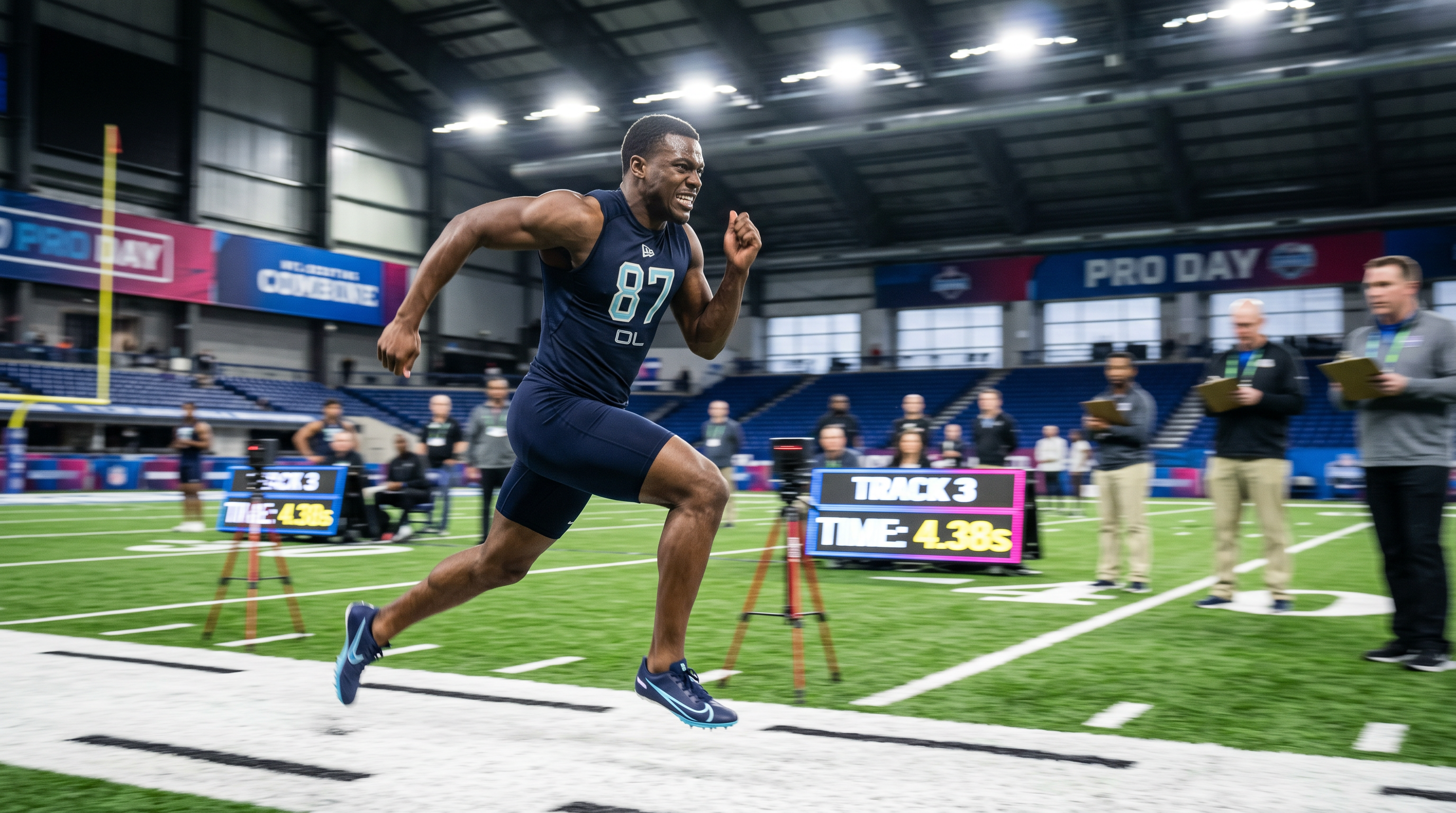
Picture this: Lucas Oil Stadium pulses with anticipation. Scouts lean forward, stopwatches poised. A wide receiver explodes from the line, churning 40 yards in a blur that etches his name into NFL lore. The NFL Combine 40-yard dash isn't just a sprint—it's a rite of passage, a raw metric that can launch draft dreams or shatter them. For NFL fans, athletes chasing gridiron glory, and fantasy football players dissecting every edge, this test reigns supreme in the pantheon of football analytics.
But what does that blistering time really mean in miles per hour? How does a 4.4 stack up against the field's elite? Enter the world of speed conversion: transforming seconds into MPH to reveal true velocity. Whether you're benchmarking your pro day dash or projecting Tyreek Hill's game-breaking bursts, mastering the MPH to 40 time equation unlocks deeper insights. And with tools like SpeedShift's Instant Speed Conversion, it's easier than ever to crunch these numbers on the fly.
Unpacking the Mechanics: Acceleration, Not Just Top-End Burn
The 40-yard dash measures average speed over 40 yards, but don't mistake it for a pure top-speed showcase. It starts with a football stance—three-point or two-point—demanding explosive first-step quickness. The initial 10 yards gauge acceleration, vital for beating press coverage or shedding blocks. From 10 to 20 yards, momentum builds; 20 to 40 rewards sustained drive.
Top speed? It peaks around 20-30 yards, but the full 40-yard dash averages it all. A 4.5-second burner might hit 22 MPH mid-stride, yet his overall MPH lags behind sustained speed demons. This blend makes the NFL Combine 40-yard dash a holistic predictor of on-field burst, from jet sweeps to pursuit angles.
Legends of the Dash: John Ross and the Record Chasers
John Ross's Untouchable 4.22: The Gold Standard
In 2017, John Ross scorched the Combine turf in 4.22 seconds—the John Ross record that still stands. That's sub-4.3 territory, translating to elite velocity. Historic speedsters like Rondel Menendez (4.24, 1999) and Xavier Worthy (4.21, 2024) nipped at his heels, but Ross's mark symbolizes perfection.
These outliers fuel debate: Does Combine speed predict NFL stardom? Ross's pro career was solid but unspectacular, underscoring that tape trumps timers. Still, for fantasy drafters, a sub-4.4 WR screams big-play upside.
The Math Behind It: Converting 40-Yard Dash Times to MPH
Ready to geek out on football analytics? The formula is straightforward: Speed (MPH) = Distance (miles) ÷ Time (hours).
- Convert 40 yards to miles: 40 ÷ 1,760 = 0.022727 miles.
- Convert time to hours: e.g., 4.5 seconds ÷ 3,600 = 0.00125 hours.
- Divide: 0.022727 ÷ 0.00125 = 18.18 MPH.
Simplified: MPH ≈ 81.82 ÷ time (seconds). For a 4.22 like Ross: 81.82 ÷ 4.22 ≈ 19.39 MPH. Plug into SpeedShift's speed converter tool for instant results—no calculator required. Kilometers per hour? Multiply MPH by 1.60934.
Average Speed vs. Top Speed: Tyreek Hill's Hidden Gear
Tyreek Hill top speed: Beyond the 40-Yard Barrier
Tyreek Hill clocked a 4.29 at his pro day—respectable, about 19.07 MPH average. Yet Next Gen Stats track him at 23.24 MPH on deep balls, peaking higher. Why? The 40-yard dash caps at 40 yards; game speed sustains over 60+. Acceleration kings shine in short bursts, but track burners like Hill hit 22+ MPH strides later.
Fantasy tip: Prioritize players whose MPH to 40 time conversions hint at top-end juice. Hill's profile—modest 40, elite tracking speed—powers his 1,000-yard seasons.
Position Benchmarks: What Times Define Elite?
Standards vary by position, blending size, role, and scheme needs:
- Wide Receivers (WRs): Elite <4.40 (19.5+ MPH), average 4.48-4.55.
- Running Backs (RBs): Elite <4.45 (18.4+ MPH), average 4.55-4.65.
- Linebackers (LBs): Elite <4.60 (17.8+ MPH), average 4.65-4.75.
- Linemen (OL/DL): Elite <4.90 (16.7+ MPH), average 5.10-5.30.
A 5.0 lineman at 16.36 MPH? Still quicker than most humans, and pursuit-ready.
Timing Tech: Electronic Precision vs. Hand-Timed Hype
Pre-2000s hand-timed dashes added 0.10-0.15 seconds due to human reaction. Modern electronic timing—laser gates at start/finish—delivers accuracy to 0.01 seconds. Official Combine uses ET, making sub-4.4s legit. Always note the method when comparing eras or pro days.
The Ultimate Conversion Table: 40-Yard Dash to MPH & KPH
Bookmark this speed conversion reference, powered by precise calculations. Times from 4.20 to 5.00 seconds, in 0.05 increments.
| 40-Yard Time (s) | Average Speed (MPH) | Average Speed (KPH) |
|---|---|---|
| 4.20 | 19.48 | 31.35 |
| 4.25 | 19.25 | 30.98 |
| 4.30 | 19.01 | 30.60 |
| 4.35 | 18.79 | 30.24 |
| 4.40 | 18.59 | 29.93 |
| 4.45 | 18.38 | 29.58 |
| 4.50 | 18.18 | 29.25 |
| 4.55 | 17.99 | 28.94 |
| 4.60 | 17.79 | 28.63 |
| 4.65 | 17.61 | 28.34 |
| 4.70 | 17.41 | 28.02 |
| 4.75 | 17.23 | 27.72 |
| 4.80 | 17.05 | 27.44 |
| 4.85 | 16.87 | 27.15 |
| 4.90 | 16.70 | 26.88 |
| 4.95 | 16.54 | 26.62 |
| 5.00 | 16.36 | 26.33 |
Use SpeedShift's Instant Speed Conversion for custom calcs—dial in any time and get MPH, KPH, even pace comparisons.
Harness Speed for Fantasy Domination and Training Wins
From draft boards to deadlift sessions, NFL Combine 40-yard dash conversions arm you with edge. Fantasy managers chase Hill-like speed profiles; athletes target position benchmarks. Dive into the data, wield SpeedShift's speed converter tool, and watch the field open up. Speed isn't everything—but in the NFL, it's the spark that ignites legends.