Typhoon vs Hurricane vs Cyclone: Wind Speed Comparison, Conversions & Global Records Guide
Imagine a swirling monster of wind and rain barreling toward shore at over 200 miles per hour—215 mph, to be exact. That's the fury Hurricane Patricia unleashed in 2015, the strongest tropical cyclone ever recorded in the Western Hemisphere. But across the Pacific, similar beasts go by different names: typhoons and cyclones. Are they truly different? Or just the same savage storm wearing regional disguises? In this guide, we dive deep into hurricane vs typhoon vs cyclone, unpacking wind speed comparisons, essential conversions, and jaw-dropping global records. Whether you're a weather enthusiast tracking the next big one or a student prepping for meteorology class, get ready for crystal-clear insights—with every gust converted into MPH, KPH, and knots for instant speed conversion.
The Same Storm, Different Names: Decoding Hurricane vs Typhoon vs Cyclone
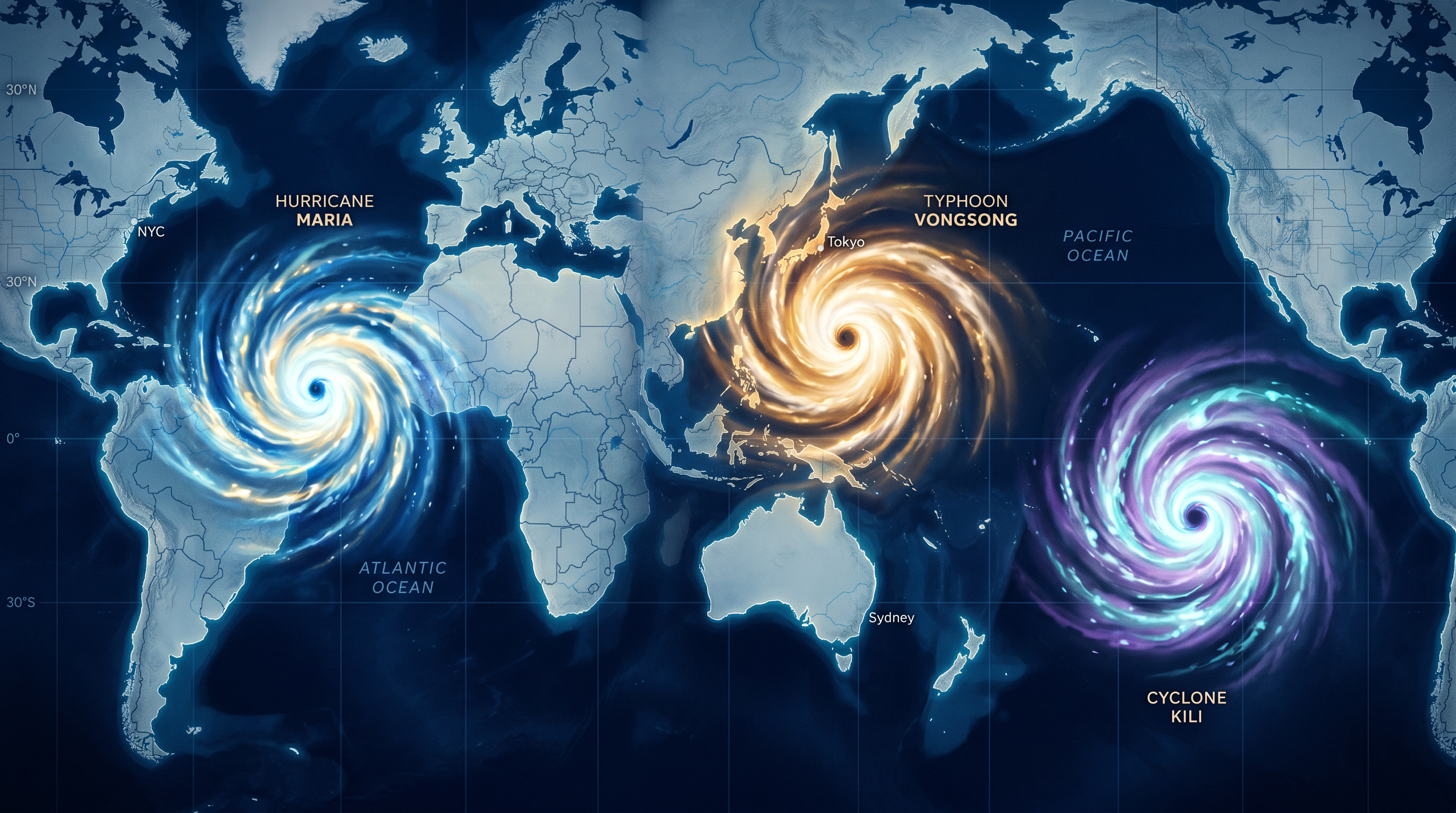
At their core, hurricanes, typhoons, and cyclones are identical phenomena: rotating tropical storms fueled by warm ocean waters, with sustained winds exceeding 74 mph (119 kph or 64 knots). The names change based on geography, courtesy of global weather agencies.
- Hurricanes: Born in the Atlantic Ocean or northeast Pacific (east of the International Date Line). Named by the U.S. National Hurricane Center (NHC).
- Typhoons: Rage in the northwest Pacific (west of the Date Line, around Japan, China, Philippines). Tracked by the Japan Meteorological Agency (JMA).
- Cyclones: Strike the Indian Ocean and south Pacific (around Australia, India, Madagascar). Monitored by bodies like Australia's Bureau of Meteorology (BOM).
Picture a single system crossing basins—it might start as a hurricane, become a typhoon upon entering new waters. The physics remain the same: low pressure at the center draws in moist air, which rises, cools, and unleashes torrential rain and ferocious winds. But measuring those winds? That's where regional quirks—and vital conversions—come into play.
Wind Speed Scales: Saffir-Simpson, JMA, BOM, and Global Comparisons
Saffir-Simpson Hurricane Wind Scale (Atlantic/NE Pacific)
The gold standard for hurricanes uses 1-minute sustained wind speeds in knots (or MPH). Thresholds define categories:
- Category 1: 74-95 mph (119-153 kph, 64-82 knots) – Very dangerous winds.
- Category 2: 96-110 mph (155-177 kph, 83-95 knots) – Extremely dangerous.
- Category 3: 111-129 mph (179-208 kph, 96-112 knots) – Devastating.
- Category 4: 130-156 mph (209-251 kph, 113-136 knots) – Catastrophic.
- Category 5: 157+ mph (252+ kph, 137+ knots) – Catastrophic damage inevitable.
JMA Typhoon Scale (NW Pacific)
Japan's JMA measures 10-minute averages, making direct comparisons tricky—10-min winds are typically 10-15% lower than 1-min gusts. For wind speed conversion:
- Tropical Storm: 34-47 knots (39-54 mph, 63-87 kph).
- Severe Tropical Storm: 48-63 knots (55-73 mph, 89-117 kph).
- Typhoon: 64+ knots (74+ mph, 118+ kph), escalating to Very Strong (64-81 knots / 74-93 mph / 119-150 kph), Violent (104+ knots / 120+ mph / 192+ kph).
Pro tip for instant speed conversion: Multiply MPH by 1.609 to get KPH; divide by 1.151 for knots. SpeedShift Converter handles this effortlessly.
BOM Cyclone Scale (Indian/South Pacific)
Australia's BOM uses 10-minute winds, similar to JMA:
- Category 1: 63-88 kph (39-55 mph, 34-48 knots).
- Category 3: 125-159 kph (78-99 mph, 68-86 knots).
- Category 5: 253+ kph (157+ mph, 137+ knots).
To compare global wind scales, standardize to 1-minute MPH. A JMA "Strong Typhoon" (77-95 knots 10-min) equates to roughly Category 4 on Saffir-Simpson. Always verify with MPH to KPH to Knots converter for speed context.
Record-Breaking Tropical Cyclones: Speeds in MPH, KPH, and Knots
These monsters hold the records. Winds standardized to 1-minute sustained for fair hurricane vs typhoon vs cyclone comparison:
- Hurricane Patricia (2015, NE Pacific): Peak 215 mph (346 kph, 187 knots). Smashed Mexico's coast like a freight train, with gusts to 250 mph (402 kph, 217 knots).
- Super Typhoon Haiyan (2013, NW Pacific): 195 mph (314 kph, 170 knots). Devastated the Philippines, killing over 6,000—the deadliest in modern records.
- Cyclone Winston (2016, South Pacific): 175 mph (282 kph, 152 knots). Australia's strongest landfalling cyclone, flattening Fiji.
In speed context, Patricia's 187 knots dwarfs most aircraft cruising speeds (around 500 mph / 805 kph / 434 knots). Use our MPH to KPH to Knots converter to visualize: that's highway speeds on steroids.
"These records remind us: no matter the name, the wind doesn't discriminate."
Why the NW Pacific Breeds Super Typhoons: Coriolis Effect and Ocean Fury
Ever wonder why typhoons pack extra punch? Enter the Coriolis effect—the Earth's spin deflecting air right in the north, left in the south, birthing counterclockwise rotation north of the equator. It kicks in above 5° latitude, perfect for tropics.
The NW Pacific reigns supreme: 30% of global tropical cyclones form here yearly. Vast warm waters (above 26.5°C / 80°F) supercharge them, like an endless fuel pump. Monsoon troughs seed disturbances, and El Niño patterns amplify intensity. Result? Violent typhoons like Tip (1979, 165 mph / 260 kph / 143 knots diameter-wise the largest ever).
Contrast with the Atlantic: cooler waters and Sahara dust cap hurricane strength. Speed context: Typhoon alleys see averages 10-20% fiercer.
FAQ: Wind Thresholds and Tropical Cyclone Essentials
What wind speed defines a hurricane, typhoon, or cyclone?
All start at 74 mph (119 kph, 64 knots) sustained. Below: tropical storm/depression.
How do I convert wind speeds instantly?
MPH × 1.609 = KPH; MPH ÷ 1.151 = Knots. SpeedShift Converter's tool delivers instant speed conversion.
Why different scales for global wind scales?
1-min (Saffir) vs 10-min (JMA/BOM) averages. Convert for apples-to-apples tropical cyclone records.
What's the strongest cyclone ever?
Patricia at 215 mph (346 kph, 187 knots)—but NW Pacific claims most top-10.
Next storm brewing? Harness this guide for unmatched speed context. Stay safe, track smart.